Your guide to buying seafood in Australia: farmed versus wild….Plus recipe for salt and pepper squid!
Guest User
I am often asked about seafood – where do I buy it from and what do I buy.
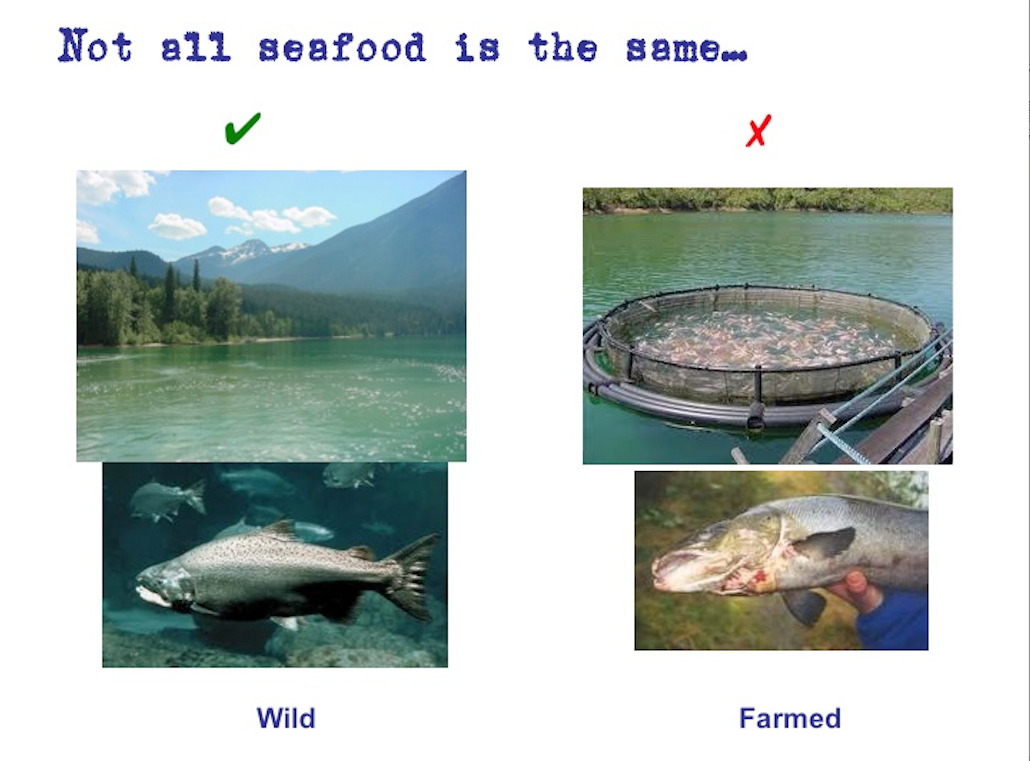
First things first. Like all food, not all seafood is created equal. Some seafood is wild (as nature intended) and some are farmed (in man-made hatcheries). And there is a WORLD of difference between the two!
Farmed fish are farmed in unnaturally crowded conditions which in and of itself breeds illness and disease. Farmed fish are commonly dubbed the battery hens of the ocean. In addition to their unnatural environment, farmed fish are fed an unnatural diet of soy pellets (which are often genetically modified), fire retardants (WTF?), wheat byproducts, antibiotics (due to rife disease epidemics in crowded conditions), feather meal, and a heap of other unnatural ingredients. In addition colour dyes are injected into farmed salmon to give them that pink colour. Unsurprisingly the micronutrient content of farmed fish pales in comparison to wild fish especially in relation to the omega 3 /6 balance (farmed fish are low in the anti-inflammatory omega 3s and too high in the omega 6. This imbalance promotes inflammation which is the root cause of all modern disease). Unhealthy diet and conditions makes for unhealthy fish which in turn makes for unhealthy humans who then consume the fish.
So here’s a potted summary of what you should know and to this end I would like to pay special thanks to my favourite fisher fellow MK for all his invaluable advice:
- All ocean trout sold in Australia is farmed. Avoid it. Sad, I know.
- All non-tinned salmon sold in Australia is farmed other than the 100% wild sockeye salmon from The Canadian Way. The Canadian Way also sells wild tuna, halibut, and wild black cod, lobster, prawns, scollops, salmon roe and smoked salmon (all 100% wild). And all with an unparalleled omega 3 to 6 ratio (I have the independent lab tests if anyone is interested. Basically their salmon has a omega 3 to 6 ratio of 10:1 and the tuna has a ratio that’s even better of 11:1 – so very anti-inflammatory!! Nowadays most people eating a typical Western world conventional diet would consume foods that have an omega 3:6 ratio of 1:20 which is very pro-inflammatory. If you aim for a diet of 1:1 or even 1:2 then you’re doing well).
The Canadian Way products are sold at various stockists AND they also home deliver! Please sure to tell the owner David I referred you. Note- I don’t get any commissions or kick backs at all from promoting this company. I only advocate businesses whose products or services I personally use and trust.
There are a plethora of certified organic salmon on the market. Don’t be fooled by the certified organic label. They are STILL farmed fish. And a farmed fish is never going to be as nutritional as a wild fish. A certified organic label doesn’t avail you of an obligation to do your due diligence. Read more here about my views on organic certification.
- Tinned salmon sold at the supermarket is wild if it says wild or wild caught. Make sure your purchase tinned salmon that is in brine as opposed to industrial seed oils like canola oil or vegetable oil which are highly processed, high in inflammation-promoting omega 6s and basically toxic to the human body (but that’s a whole other discussion).
- Some King prawns and Tiger prawns (Australia only) are farmed. So you will need to ask if they are wild versus farmed! Farmed prawns also taste vastly different and this is reflective in their cheaper price. Crystal bay and Vannamei prawns are two examples of farmed prawns so avoid those. You'll very rarely see a farmed prawn sold raw.
- Oysters and mussels are filter feeders so even though they are technically farmed they are literally as good as being wild. There is literally no truly wild oysters sold in Australia. NZ mussels are best as the colder clean water lends itself better to their needs and high dissolved oxygen.
- Fresh tuna sold in fish shops is mostly wild caught then kept in floating pens and fed a mixture of pellets and fresh pilchards. So it's tantamount to being farmed. The exception is the tuna from The Canadian Way as discussed above. Tinned tuna sold in supermarkets is wild.
- Most barramundi in Australia is now farmed. So you will need to ask if they are wild versus farmed! All farmed barramundi are harvested at the same size (40-45cm) so if they're larger than that it’s typically ok to assume that they are wild. They aren't typically the freshest fish to eat anyway. The netting process and remoteness of where they live means they could be weeks old by the time they even get to the fish monger. Plus you'll always pay a 'name tax' for this national fishing icon.
- Herring, pilchards, whitebait, sardines and anchovies are all wild and will never be farmed. They're cheap and the equivalent of a briny superfood. Head and stomach can be eaten easily.
- There is a plethora of other farmed seafood on the market. If you're not sure, always ask! By law they must answer you truthfully if you ask them outright. I always gauge their level of honesty by asking them about their salmon and ocean trout because I know for a fact that they will be farmed so if they answer that they are wild, I politely smile then bolt out the door.
- Try to buy the whole fish as opposed to fillets. It gives you a better indication of freshness. Inspect eyes and moistness of the skin. If the lips and face look even a little dehydrated then opt for something else. Buying whole fish means that you can ask the fishmonger to fillet it for you and ask them to put the head and frame in a separate bag for you to take home to make a stock (say tuned for my upcoming round of bone broth classes so you learn how to make a stock easily and most deliciously!).
And what about sustainability?
This has become a pressing issue for many people. Line caught fish are by far the most sustainable type to buy as opposed to net caught fish (although anchovies school together so when they're netted there is zero bycatch).
Where do I buy wild seafood?
From any old fish shop that I happen to pass by on my travels and simply walk in and say “Hey! What’s wild and what’s farmed?” I have 2 shops that are local to me that I typically go to: Bondi Road Seafood and the seafood counter at DJs at Bondi Junction. I’ve built up a good relationship with them over the past decade and I trust what the managers tell me. They don’t bother pushing any type of farmed fish on me and will offer me the freshest wild fish. I typically buy snapper, ling, deep sea perch, oysters, mussels and sardines. I always avoid salmon and ocean trout at fish shops (and at restaurants). If you live close to the fish markets or better yet catch your own fish then I want to marry you!
I always have a stash of frozen salmon fillets (esp. the tails as they are much cheaper!) and frozen smoked salmon from The Canadian Way which I pull out if I don’t get a chance to make it to a fish shop. And my fridge has a stash of salmon roe which we eat as a condiment to our eggs most mornings and sometimes as pre-dinner appertiser on cucumber rounds with home-made mayo or cream cheese. Kids LOVE this! Easy way to get some nutrient-density into them.
How often do I eat seafood?
I recommend eating quality seafood at least twice a week.
One of the many mistakes I made when I transitioned to a traditional wholefoods diet (from a macrobiotic vegetarian one) is to forget about seafood. I was so hell-bent on getting my iron levels up and building back nutrient stores that all I bought was red meat, red meat, and even more red meat. And I see many of my clients in my health coaching sessions also not eating anywhere near enough seafood when I look at their typical meals. There is nothing wrong with grass fed and finished read meat. I eat it about 3-4 times a week. But we need a BALANCE of land and sea animals as there are nutrients in sea foods that are not as abundant in land animals eg omega 3 and iodine. Broth and organ meats are also required to balance out our mussel meat intake. To read more about some of the other common pitfalls I made when I first started on a paleo / ancestral / traditional wholefoods diet (pick whatever name floats you boat!) click here.
But even when I started making a conscious effort to eat more seafood I STILL keep forgetting about it and when I reflected back over what I had eaten I realised I only ended up eating it very sporadically. So what I now do is to assign 2 nights of the week as my seafood nights. So I always know that on Tuesdays and Fridays its seafood night so I better get to a fish shop or defrost some frozen fish. I need idiot-proofing sometimes! I do the same with organ meats (every Wednesday) and that way it’s all sweet. Many of my clients also adopt this method. Having a routine is like wearing a uniform. It takes the stress out of wondering what to cook.
I always have a stash of tinned wild fish in my pantry for school lunches or emergencies that I buy from the supermarket. Eg anchovies, salmon, mackerel, sardines. These are in brine or extra virgin olive oil as opposed to industrialised seed oils. These are great to take camping, on picnics or day trips. Along with Westgold butter I think these are the only food items I buy from the supermarket nowadays!
And what about the issue of mercury, dioxins and PCBs?
Chris Kresser has written a couple of excellent articles on these issues which you can read here and here.
His bottom line is that it is more dangerous to avoid eating wild fish than to eat it due to any mercury or other toxins it might contain. This is because selenium found in fish protects against mercury toxicity. When I spoke to Sally Fallon (author of Nourishing Traditions and head of the Weston A Price Foundation) about this issue in 2007 she too seemed very relaxed about the mercury issue. I personally avoid the larger fish (eg swordfish) and opt for the smaller ones and try to buy from local Australian or NZ waters rather than from overseas with the exception of seafood from The Canadian Way which of course comes from pristine cold Canadian waters. Cold water seafood is always going to be healthier than warm water seafood.

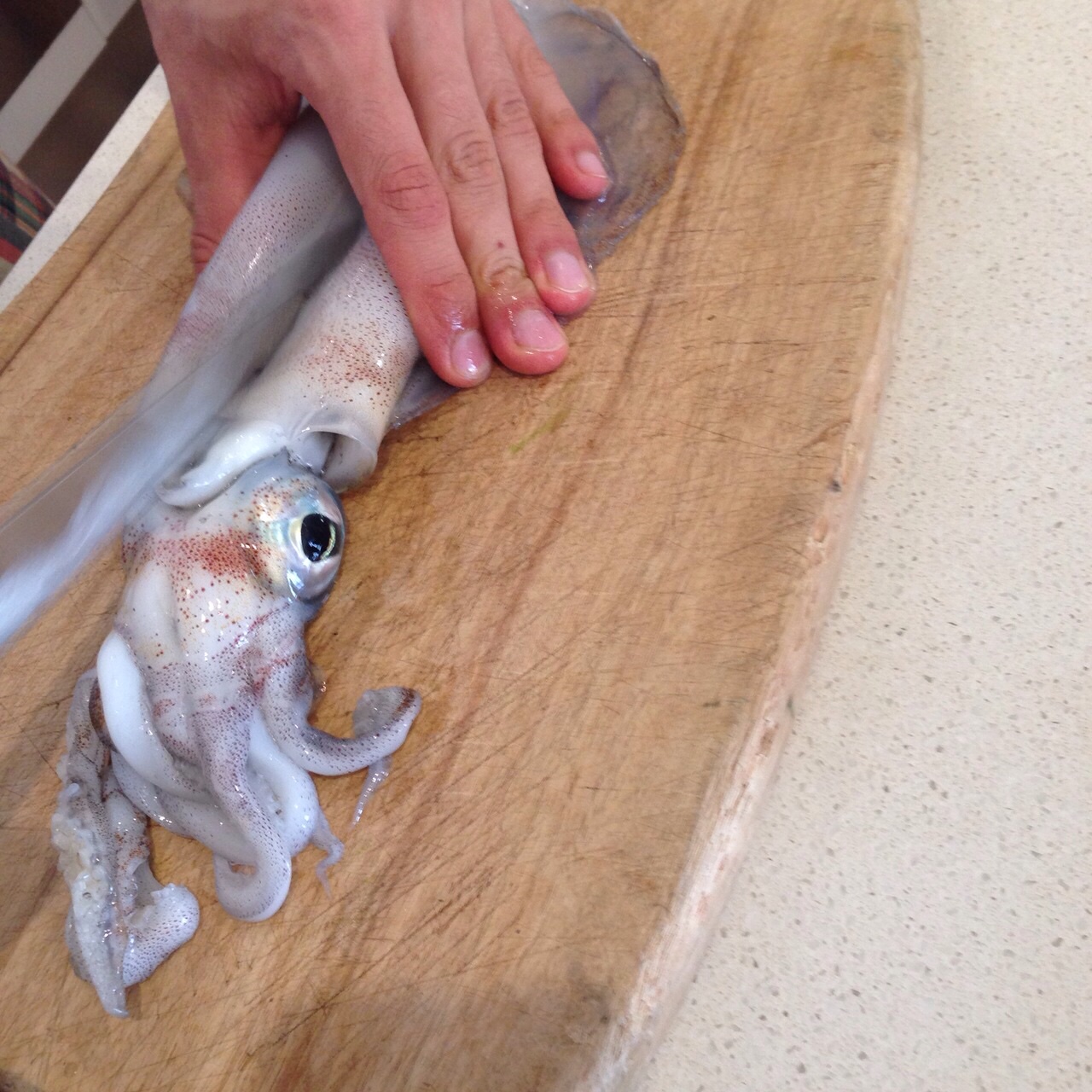
I thought I would ALSO share my recipe for
salt and pepper squid!
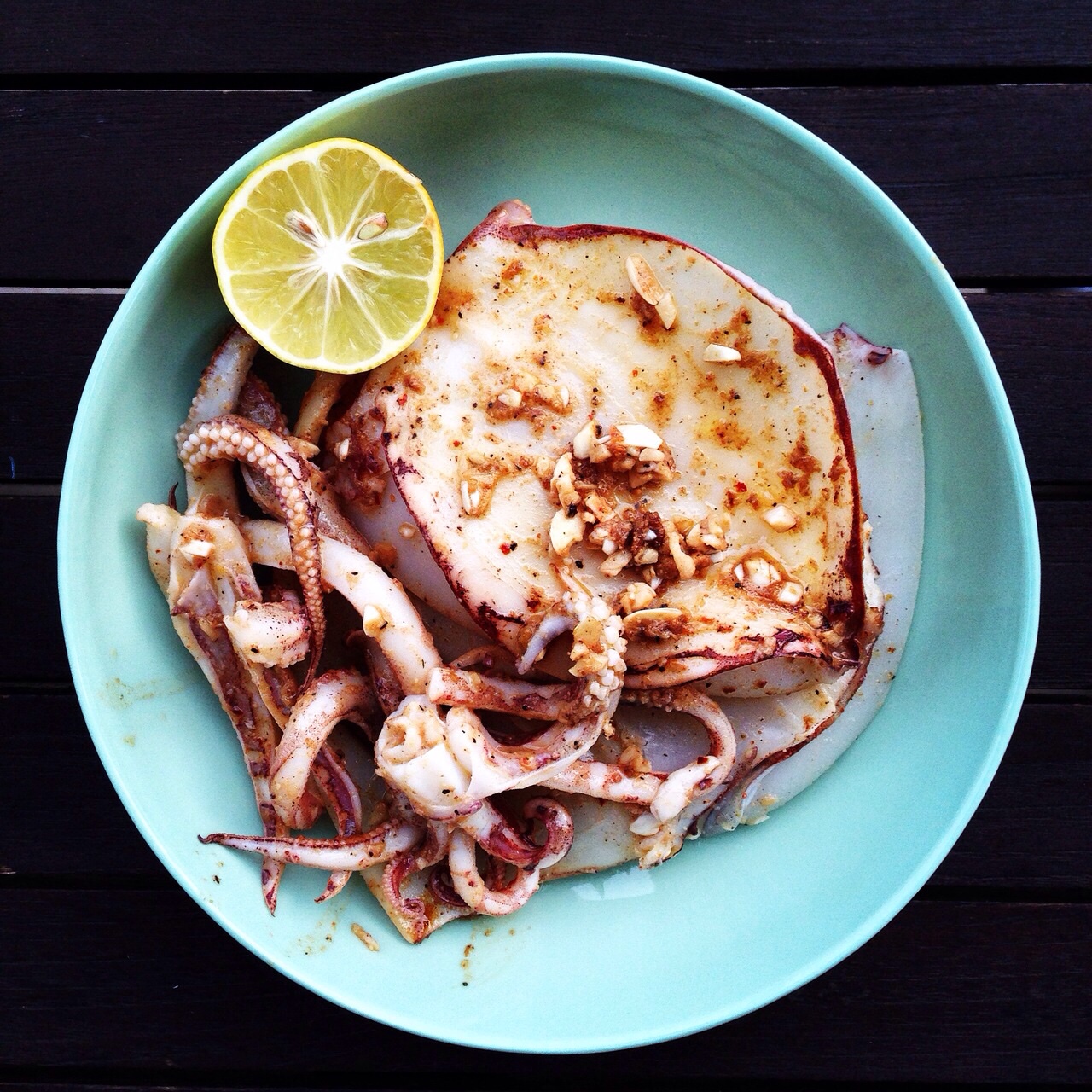
Salt and pepper squid
Ingredients:
Freshly caught wild squid
Lemon wedges for serving
Butter
Garlic powder
Chilli flakes
White wine
Unrefined salt
Cracked pepper
Directions:
Clean the squid by:
Cutting the stomach lengthwise and removing the intestines including the ink sac intact
Cutting above and below the eyes and discarding them but keeping the tentacles
Running under filtered water
Pat the squid dry and liberally coat with butter, garlic powder, salt, pepper and chilli flakes.
Heat a large frying pan until very hot.
Add a splosh of white wine to the frying pan and immediately add the squid. Fry the squid on either side for approximately 15-20 seconds (no longer!).
Serve with lemon and home-made aioli.
You also might like to try some of my other seafood recipes:
Steamed mussels with garlic, ginger and parsley