Contact Star Anise Organic Wholefoods
 

Please use the form on the right to contact me!
I will get back to all enquiries as soon as possible.

Soulla x 


123 Street Avenue, City Town, 99999

(123) 555-6789

email@address.com


You can set your address, phone number, email and site description in the settings tab.
Link to read me page with more information.

Blog

This blog started as a way for me to share my recipes + culinary adventures, tips for vibrant health + happiness, thoughts on the latest developments in nutritional medicine + the low down on the Sydney wholefoods scene and beyond...

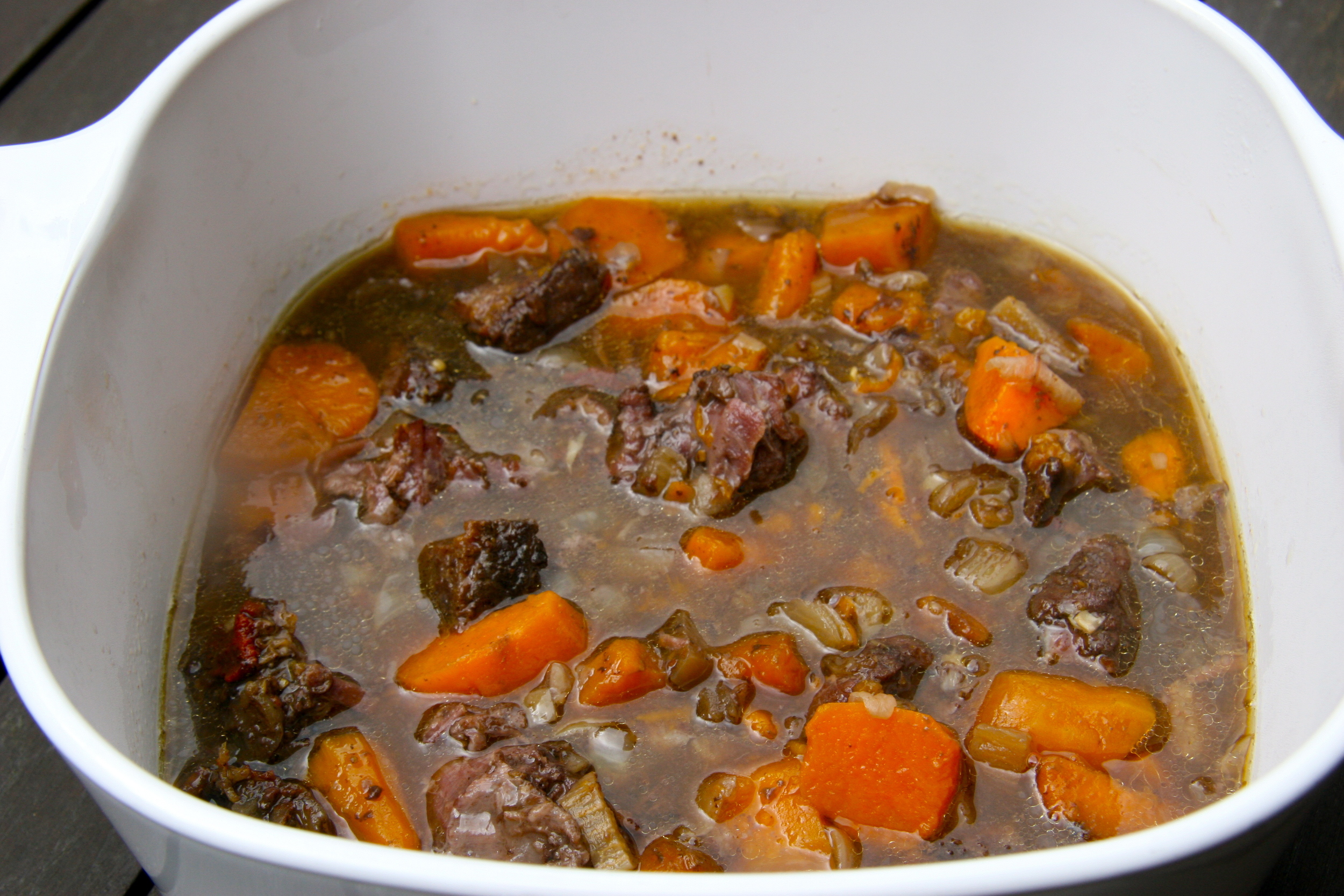
Mildly spiced beef cheek and sweet potato casserole

This week I bought beef cheeks for the first time. They are cheap ($21.99/kg) and I bought the Tova Platinum grass fed brand from David Jones Food Hall. I slow cooked them in a casserole for 24 hours and they were so incredibly melt-in-your-mouth tender. I share my simple recipe below. For those of you who have done my casserole cooking classes you will know that my casseroles follow an easy-to-remember 4 part formula:

1. Pastured meat - in this case 1 packet of Tova beef cheeks.

2. Liquid - 1 cup home made beef or chicken broth and 1:4 cup balsamic vinegar or red wine. If you don't have bone broth just use filtered water- it won't be as rich, nutritious and flavoursome but it will still be fine.

3. Herbs and spices - I used 1 tablespoon OVVIO Indian Herb & Spice blend bought form OVVIO -The Organic Lifestyle Store in Paddington 5 ways (or make your own using Cumin, Tumeric, Cardamon, Fennel, Fenugreek, Chilli, Cinnamon, Garlic granules), plus liberal amounts of sea salt and cracked pepper. Instead of the Indian herbs you could use garam masala which is similar. Or use Mediterranean inspired spices like oregano, basil, bay leaf and some tomato puree. If you don't have any spices don't let that stop you- just season with good ol' sea salt and pepper.

4. Vegetables- a couple of diced garlic cloves, 1 diced onion, 1 large sliced sweet potato or other root vegetables to your liking.

Add everything into an oven proof casserole dish or slow cooker. This will take you between 2-4 minutes (I guarantee it- I've timed myself many times!!). Cook on low heat (e.g. 80 degrees) for 8-24 hours. Ladle the juices over the meat in shallow soup bowls. Serve with some steamed buttered greens or a garden salad. Easy, delicious and nutritious! Great for these cold wintery evenings.

My 3 favourite coffee substitutes

I love coffee - the taste, the smell, the resultant 'hit'....  but I can't drink it every day. It makes me too wired and anxious and it effects my sleep. Sigh. So I've had to resort to a few other winter warming substitutes. Here are 3 of my favourites: Dandy latte

IMG_0735

IMG_0735

IMG_1176

IMG_1176

Dandelion root has a slightly bitter taste like coffee. For the nutrition benefits of dandelion root click here. I buy dandelion root either from OVVIO - The Organic Liefstyle Store or less frequently the Bonvit brand (sold at various organic/health stores and at Woollies supermarket). Bonvit is sold either finely ground or medium ground. The medium ground is much coarser needs to be infused in a bodum. Simply add 1-2 teaspoons in a bodum, pour in 1 cup boiling water and infuse. Pour into a mug and if desired add  milk and raw honey. The finely ground root can be made 2 ways:

1. like an instant coffee by simply adding 1-2 teaspoons in a mug and adding 1 cup of boiling water. Add milk and raw honey if desired; or

2. like a latte. This is my favourite as its richer/creamier and more akin to a cafe latte. Dissolve 1-2 teaspoons of finely ground dandelion root in a saucepan and add a small amount of boiling water to dissolve. Add 1 cup of whole milk, a good sprinkling of cinnamon powder and a sprinkling of vanilla bean powder. You can add some raw honey if you require some extra sweetness.

Heat gently until warm (do not boil) and blend using a hand held blender.

Pour into a mug. Dust with nutmeg and extra cinnamon powder on top.

When I served this recently to my friend Natasha she declared "This is the best milky drink I've ever had!!".  I think this is undeservedly high praise but the fact that our 3 collective children hijacked our dandy lattes shows that the drink is coveted by young and old.

Herbal chai tea

IMG_1156

IMG_1156

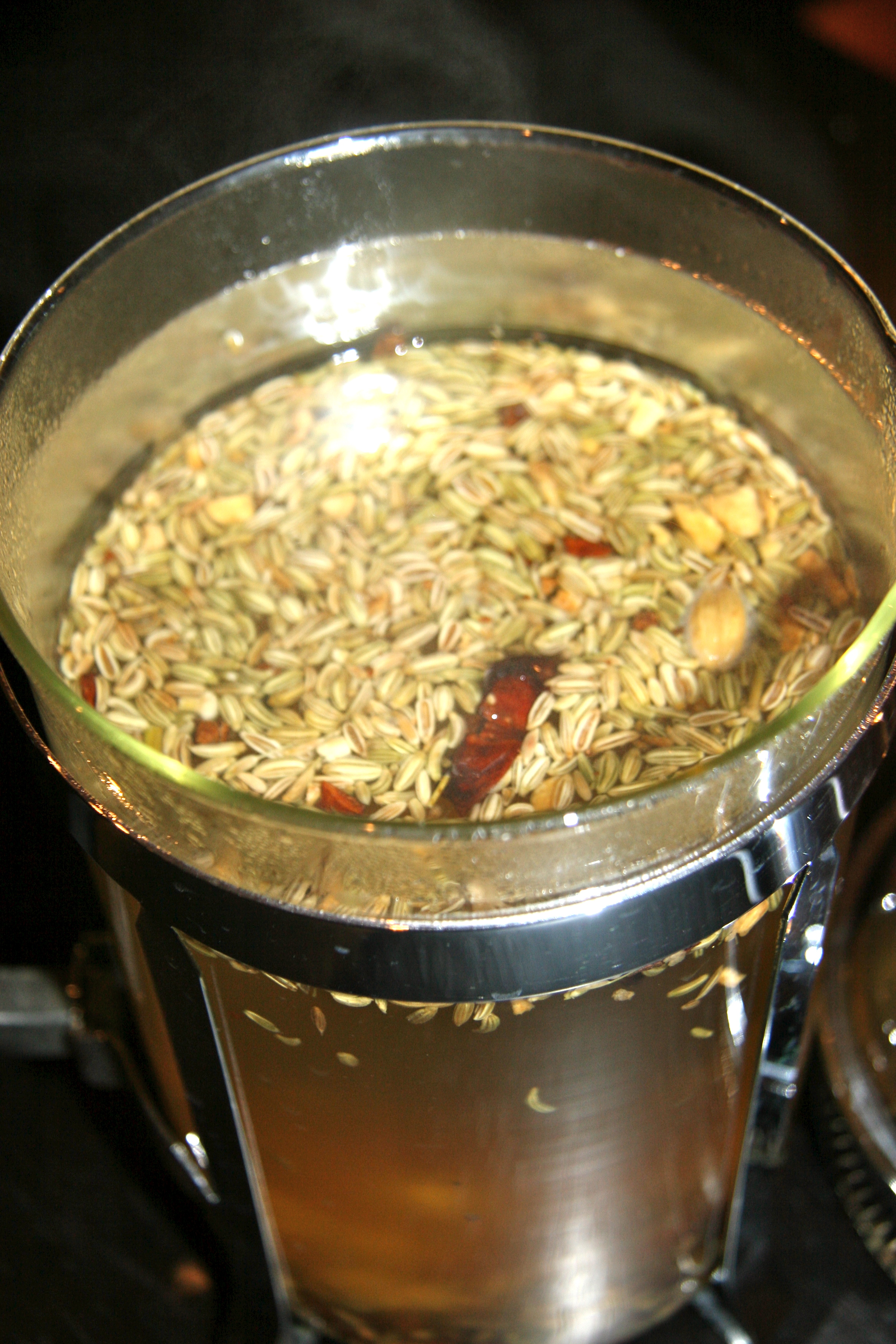
I grew up on a tea my mother would make with cinnamon bark, cloves and aniseed. I guess it's the Greek version of a herbal Indian Chai tea (without the black tea leaves). My mum calls it "Ygliganiso" (pronounced in a way that only someone with Mediterranian heritage could muster-  a sounds that comes from deep in the back  of your throat). Using my mum's tea as inspiration and adding a few more spices over the years I now make up my own blend as follows:

3x cinnamon quills (broken into small pieces)

½ tablespoon cloves

½ tablespoon aniseed

½ tablespoon star anise (broken into small pieces)

3 tablespoons fennel

3 tablespoons ginger root

4 cardamon pods

Mix spices and store in glass jar in cool place.  Add 1 teaspoon per cup into a teapot or bodum and infuse with boiling water. Serve with milk (for a milky chai tea, which I prefer), and if desired a little raw honey.

I typically serve this when friends/guests come over. It's always a winner at dinner parties after dessert. My kids love it in sippy cups with lots of milk to cool it down. I have found that this is sometimes the easiest way to get fluids into them in winter when they don't feel like drinking cold water. I find these herbs have a very calming effect on the nervous system so its a wonderful tea for children as well as adults.

Chilli orange hot chocolate 

I got this idea from Max Brenner a decade ago but of course I only use real chocolate (unprocessed fermented raw cacao powder). Orange and chocolate combine to make  a jaffa-like taste (remember those little orange balls from your childhood??).

In a small saucepan add:

IMG_1145

IMG_1145

  1. 1 cup of whole milk or coconut milk

  2. the rind from 1/2 an orange (use a lemon zester)

  3. 2 teaspoons raw cacao powder (I like the Loving Earth brand)

  4. a sprinkling of chilli powder (depending on how spicy you like it)

Heat gently until warm (do not boil) and blend using a hand held blender.

Pour into a mug. You can dust some extra raw cacao powder on top. My husband took a sip to try it this week then claimed it as his own. Typical.

I buy my organic herbs and spices from OVVIO- The Organic Lifestyle Store at  Paddington 5 ways or from an organic wholesaler. I try to buy organic herbs and spices as conventional ones are typically irradiated and /or sprayed.

These 3 drinks are also a great way of consuming non-diuretic beverages in winter when you just don't feel like drinking boring old cold water!! (note- dandelion root is slightly diuretic but less so than coffee).

So make yourself a cup of tea/hot chocolate.... and sit back and relax!! What are your favourite coffee substitutes??

Pork - interesting news plus recipes

I apologise in advance to all my kosher friends out there, and those of you who do not eat pork.

For me, however, pork would have to be one of my favourite meats. When faced with a slow cooked pork shoulder with crispy cracking……I instantly ascend into heaven. But a while ago I read in one of the Weston A Price quarterly journals something new about pork that I didn’t know that I would like to share with you.

The results of a pilot study show unequivocally that consuming unmarinated cooked fresh pork has a significant coagulation and clotting effect on the blood.

Apparently traditional preparation of pork involved either (a) salt curing following by smoking to preserve it (to make bacon, ham, prosciutto) or (b) marinating fresh pork in an acidic medium, usually vinegar, prior to cooking.

Yet like most people I simply cook (or used to cook) fresh pork without necessarily marinating it in an acidic medium.

In the pilot study an investigation was done via live blood analysis on 3 adult volunteers who normally eat a traditional wholefoods diet. They came into a lab once a week to consume pork prepared in various ways and to have their blood examined before and after eating it. Microphotos of their blood showed unexpected results:

-       5 hours after consuming unmarinated cooked fresh pastured pork chops the subjects showed extremely coagulated blood. Prior to consumption, their blood looked very healthy. 2 of the 3 subjects felt      considerable fatigue after eating the pork chop (suggesting reduced peripheral blood circulation due to red blood cell stickiness and aggregation).

-       after consuming a pork chop that had been marinating completely submerged in apple cider vinegar for 24 hours the subjects showed essentially no change in their blood.

-       After consuming pastured bacon and prosciutto the subjects showed essentially no change in their blood.

-       As an additional control, after consuming unmarinated cooked fresh pastured lamb chops the subjects showed no change in their blood.

fall2011 rubikfig1

fall2011 rubikfig3

The top Microphotograph shows blood of male, 52, before consuming the unmarinated cooked pork chop. Red blood cells are seen as round cells, and small white patches of platelet aggregates are seen. This is the picture of normal, healthy blood. In contrast the bottom microphotograph shows his blood five hours after consuming the unmarinated cooked pork chop. Red blood cells are entirely stuck together in rouleaux (stacks of coins) formations, and a high level of fibrin, white threads, means that early blood clotting has transpired.

So the bottom line is if you are going to eat pork make sure that:

(a) it is preserved as per bacon, ham or prosciutto (preferably nitrate-free as nitrates are carcinogens); or

(b) you marinate fresh pork in an acidic medium such as apple cider vinegar for 24 hours prior to cooking to prevent blood coagulation, clotting and fatigue. Pork may be unique in this regard as other meats such as unmarinated lamb does not have blood coagulating and clotting effects.

What is it about unmarinated cooked pork that produces biochemical inflammation and early blood clotting? In searching the modern scientific and medical literature for clues nothing was uncovered that might explain the results of this study. The authors of the study speculate that raw pork contains a toxin unidentified to date and that heat alone from cooking cannot destroy it, but that salt curing/fermentation or marinating in acid plus cooking, do so. What is most notable is that the results of the study demonstrate the wisdom of traditional food preparation. The preparing of pork in customary ways by salts and acid marinades makes pork safe for consumption not only by killing parasites and bacteria but preventing inflammatory and blood clotting effects as observed through the live blood analysis of this pilot study.

To read the full article in the Weston A Price journal (‘Wise Traditions’ Fall 2011, Vol 12, No 3, p 24) click here.

Below I set out my simple slow cooked pork shoulder casserole recipe now modified to include apple cider vinegar in the marinade mixture. Marinating also tenderizes the meat, improves its texture and imbues it with more flavour.

Recently I bought from Feather & Bone on line a whole salami for only $35/kg and whole leg of ham at $26.50 (plus $9 delivery fee). These were served with a raw cheese platter at my son’s birthday party recently and the platter was demolished by young and old alike. Excess ham was sliced and frozen in between baking paper for school/work lunches.

Happy pork eating!!!

Slow cooked pork with crispy crackling

Ingredients:

1 pork shoulder (approx 1.75 kg) or pork belly or rolled pork belly

2 cups beef or chicken stock

¾ cup white wine

1 cup raw apple cider vinegar

12 cloves, ground

1 tablespoon maple syrup

cinnamon powder

unrefined salt

pepper

Directions:

Place pork in Le Creuset or other casserole dish. Add stock, wine, apple cider vinegar, cloves, a sprinkling of cinnamon powder and maple syrup. Season with salt and pepper. The pork should be almost submerged.  Marinate in fridge for 24 hours.

Slow cook covered at 80 degrees for 12- 24 hours. Keep shoulder covered in Le Creuset out of oven until crackling is ready.

To make the crackling, remove fat from the top of the shoulder (it should slide off easily in one piece after slow cooking) and place on a baking tray lined with baking paper. Add liberal amounts of further salt to the fat. Turn oven temperature up to very high heat (eg 200 degrees) and cook fat on both sides until crispy. This should take approx 15 minutes.

Cut crackling in pieces and place on top of shoulder which should be so tender than it falls off the shoulder bone.

The stock in the bottom of casserole dish can be drizzled over the meat and/or consumed separately as a broth.

Serve with a fresh salad of sliced apple, rocket, activated hazelnuts and shaved parmesan or goats curd. If desired you can make a traditional apple sauce by steaming 4 chopped cored apples (I leave the skin on) until very soft then mixing with a hand held blender with generous amounts of butter and/or cream and a sprinkling of cinnamon powder. The sauce can be thinned with whole milk if it is too thick. Any left over apple sauce can be refrigerated and is delicious served as a side dish for breakfast with yogurt or as a dessert in its own right.

Any left over pork can be sliced and thrown into a salad the following day. Simply add sliced apples, lettuce greens, snow peas, avocado, parsley, cucumber, strips of carrots and capsicum,  drizzle with extra virgin olive oil and balsamic vinegar and season with sea salt and pepper..... and enjoy (preferably with friends)!