Contact Star Anise Organic Wholefoods
 

Please use the form on the right to contact me!
I will get back to all enquiries as soon as possible.

Soulla x 


123 Street Avenue, City Town, 99999

(123) 555-6789

email@address.com


You can set your address, phone number, email and site description in the settings tab.
Link to read me page with more information.

Blog

This blog started as a way for me to share my recipes + culinary adventures, tips for vibrant health + happiness, thoughts on the latest developments in nutritional medicine + the low down on the Sydney wholefoods scene and beyond...

Meet the new kids on the block!

Guest User

Here’s  heads up on some of my new products that you might be interested in….some of them are not technically new and might be very familiar to you but it has taken me several years to blog about them (…life got in the way…)
Activated mixed nuts: 
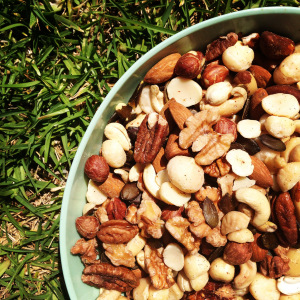
They are back! A mix of 8 different activated nuts and seeds. Similar to the snack mix but without the dried fruit. A great gift idea or for those who like variety or for new customers who want to try out all of my nuts (before deciding on which one is their favourite!).

Activated sesame seeds:

I use these for certain recipes including my Cypriot Easter slice – like a paleo bread- called Flaounes, and to sprinkle on top of Asian-flavoured meat dishes or in Asian flavoured soups.

Activated pine nuts:
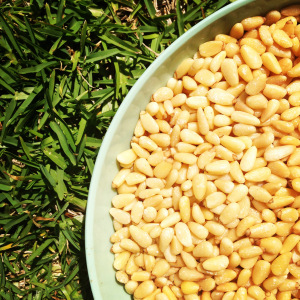
I use these for certain recipes including my rosemary and pine-nut cake, pesto, to throw into my modern spanakopita (Greek spinach pie) or in salads. They have the highest amount of protein of all nuts.

Activated buckwheat:

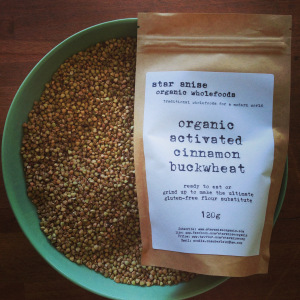
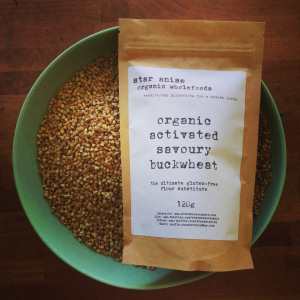
These are whole hulled buckwheat groats which I activate (soak and dehydrate). I make 2 different varieties: a sweet buckwheat which is dusted with cinnamon powder before going into the dehydrator ovens, and a savoury version which is dusted with various Ovvio Organic herbs and spices (oregano, paprika, sage, thyme, pepper, garlic granules, all spice, sea salt) before being dehydrated. I grind the activated groats up just prior to use (to prevent oxidative damage) in a nut/spice/coffee grinder (or Thermomix if you have one)  to yield a very fine flour as opposed to an ordinary food processor. What do I use these for? Basically as my gluten-free breadcrumb and flour substitutes.

In particular, I use the savoury version for:

  • bread-crumbing veal schnitzel, lambs brains etc (yes it’s STILL possible to eat schnitzel and crumbed food on a traditional  wholefoods diet!!)
  • various semi-sweet/savoury cakes I have created (eg my rosemary and pine-nut cake and my Cypriot Easter slice ‘flaounes’).

I use the cinnamon buckwheat:

  • for cakes, muffins, biscuits and pancakes. I still want to enjoy all of my old favourite sweet treats but have crafted recipes without all the gluten, refined sugar and other processed crap. Just nutrient-dense ingredients with no empty fillers. Click here for the recipe for my activated buckwheat pancakes.
  • as a base for my gluten-free muesli
  • to throw into yogurt (my kids love this for morning tea or dessert)
  • in one of my sokolata (see below) recipes to create a Toblerone-like texture (aka maple crunch sokolata). Very yummy.

These activated buckwheats are very versatile and good ones to have stashed in the pantry as shelf life is about 1 year (or more).

Sokolata (Greek for chocolate):

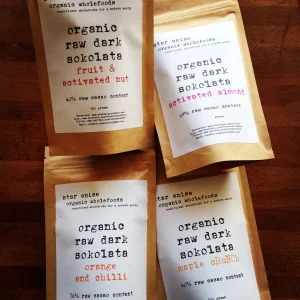
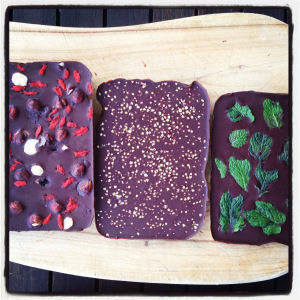
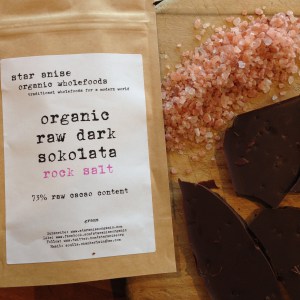
This is my raw dark chocolate sweetened with maple syrup. Why? Because I couldn’t find a brand of chocolate on the market that didn’t contain refined sugar or agave syrup (too high fructose despite being natural) or other nasty ingredients. There are a couple new producers of clean chocolate out very recently but I still struggle with their texture hence why I’ve stuck with my own. Plus I love the whole process of making chocolate and creating different flavours……of which i have 11  including one that is totally unsweetened (mellowed with a hint of vanilla essence) for the hard-core espresso-drinking sweetener-free crowd. Hats off to them. Other flavours (sweetened with maple syrup) include: plain, fruit & activated nut, lemon zest & ginger, orange & chilli, maple crunch (which contains my activated buckwheat to give a Toblerone-like texture), peppermint, espresso, coconut, activated almond and rock salt. 4 new flavours are in the pipeline too (rosewater, rosemary, spicy chai and raspberry ripe). Yep, I’m a tab obsessed with chocolate. Raw cacao powder is high in antioxidants and the brand i use has been fermented for 3 days. Raw cacao butter is a source of quality saturated fats and all-important cholesterol (that’s NOT a typo. Confused? Come and see me for a personal nutritional consultation and have every notion of what constitutes a ‘healthy’ diet turned upside down and inside out).

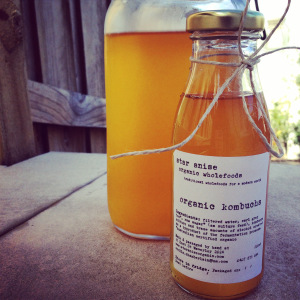
Kombucha and beet kvass:
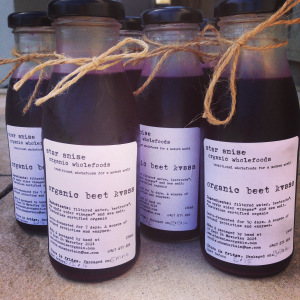
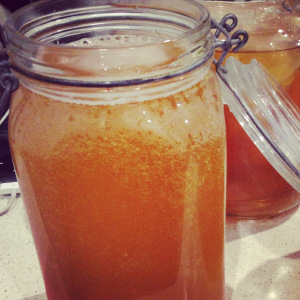
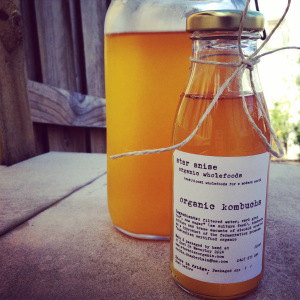
These are 2 lacto-fermented beverages rich in probiotics (good bacteria) essential for good gut health. The more different tasty strains of good bacteria we can get into our gut the better. Diversity of gut flora is key.

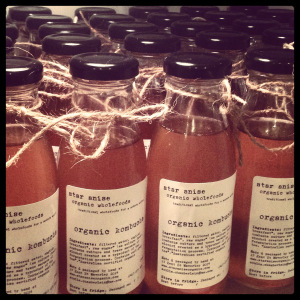
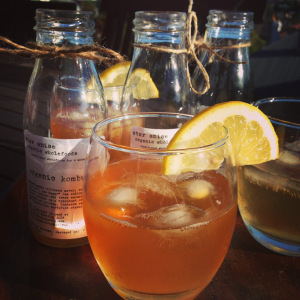
My Kombucha is made from Ovvio Organics tea, rapadura (unrefined cane) sugar, a kombucha scoby (a collection of friendly bacteria and yeasts) and filtered water. It is a refreshing bubbly tonic- I call it the original soft drink. Slightly sweet, aromatic, fragrant and effervescent… it is a hit with both kids and adults.  My kids could drink this by the liter if I let them. Beautiful on its own or teamed with ice and lemon/lime,  or makes a great base for cocktails (add to vodka, gin or champagne). Very timely coming into summer especially when entertaining.

Beet kvass is made from chopped beeetroots. It is a powerful blood tonic and detoxifier and excellent for promoting regularity.

I will be running a course on lacto-fermentation in the coming weeks (date yet to be set) so you can learn to make these plus more.

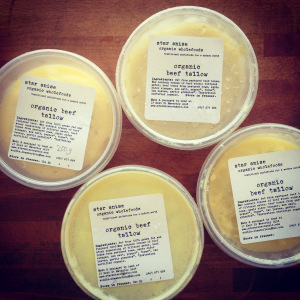
 Tallow:

This is the fat that rises to the top of the beef broth (from 100% pastured cows) that is skimmed and solidified. I save on butter costs and use tallow instead of butter when frying meat or baking root veggies or chips (I still use loads of butter and coconut oil for other things). Always store tallow in freezer and hack of a piece with a knife on a chopping board just before using. It’s a non-dairy natural fat alternative excellent for those with dairy intolerances (because let’s face it you don’t want EVERYTHING to taste like coconut oil!). It is excellent for cooking with due to its high smoke point. It also makes for an excellent (all natural/non-toxic/edible) body/face moisturiser esp when you add a couple drops of essential oils to masks any smell. You might get a few dogs licking your legs though (which makes for an interesting conversation opener when the dog owner proclaims “I’ve never seen Spot licking anyone’s legs like that before!!!”).

You can purchase directly from me (as per procedure on second page of price list) or selected products only sold at various retail outlets.

To learn of new recipes, nutritional info, what my kids are taking for school lunches and loads of other stuff you might like to follow me on instagram (soullachamberlain), Facebook andTwitter

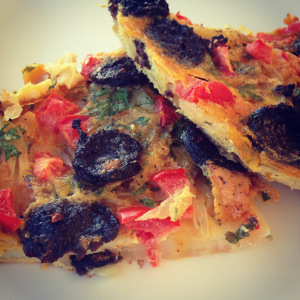
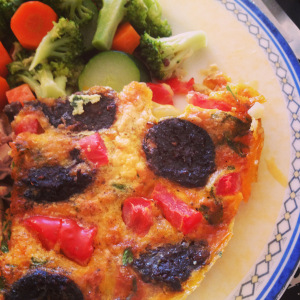
Spanish Omelette (Tortilla Espanola)

Guest User

Cooked and cooled potatoes are an excellent source of resistant starch, a prebiotic that helps feed the probiotics (good bacteria) in our gut. To learn more about resistant starch, and why you should consume it, read my blog post here. Spanish omelette is one easy and yummy way to incorporate cooked and cooled potatoes into your diet.

It is a typical Spanish dish consisting of egg omelette with potatoes. In my creation I’ve added black pudding or chorizo for extra nutrient-density and some cherry tomatoes and parsley for colour. I like to serve this dish cold to take advantage of the resistant starch properties of cooked and cooled potatoes. It readily lends itself for school or work lunches, eaten straight from the fridge as leftovers or prepared ahead of time for every day dinners, dinner parties or picnic lunches.

Ingredients:

2 large or 4 small potatoes (approx 500 grams)
8 eggs
1-2 tablespoons cream (optional)
1 black pudding (blood sausage) or chorizo, sliced into thin rounds (approx 150g), (optional)
1 large red onion, sliced (or brown onion if red not available)
12 (approx) cherry tomatoes, cut in half (or ½ large tomato, diced)
handful of parsley, chopped
unrefined salt
cracked pepper
1 tablespoon tallow
1 tablespoon butter (or fat of choice)

Directions:

 Preheat grill on high. Thinly slice potatoes and steam until soft (approx 10-12 minutes).

Melt tallow in small frying pan on low heat. Cook the black pudding on each side until browned (or cook underside on the stove top then transfer to the oven under a heated grill element to cook the top side). Leave in steamer until ready to use.

Meanwhile melt the butter in a large frying pan on low heat. Add the onions and sauté until golden brown stirring occasionally. Take approximately half of the onions out and set aside. Add the cooked sliced potatoes, and place the onions and parsley on top.

Blend eggs (and cream) with stick blender until well mixed. Pour egg mixture into the frying pan on top of the potato mixture. Scatter the cooked black pudding/chorizo and cherry tomatoes into the mixture. Season with salt and pepper.

Cook the underside of the omelette on the stove top before transferring to the oven under a heated grill element to cook the top side until golden. Once the top side is golden brown take out from the grill and if the eggs still haven’t set (test by tilting the frying pan to see if the eggs are still runny) then place back on the stove top on very low heat and cook until the mixture is set.

Keeps in refrigerator for a couple days.

Serves 4 as a main or 8 as a side.

Note: I tend not to peel the skin on potatoes unless they are particularly grubby / full of soil. This typically depends on the variety of the potato. Sometimes a little scrub with a brush and filtered water is enough to remove excess dirt.

Variations:

Instead of cooking this in a frying pan you could all the ingredients in a greased oven-proof baking dish and bake in the oven at 120 degrees Celsius for 1 hour or until set.

What is resistant starch and why you should consume it

Guest User

Resistant starch is all the rage right now in the ancestral health community. I have been receiving numerous enquiries over the past few months about resistant starch and how to consume it. Firstly I want to point out that I don’t follow trends. I try to understand the science behind something before I alter any of my lifestyle choices. So let’s start with the science and a potted summary of gut health because this is where it all begins….

  • Our health depends on the health of our gut (by “gut” I’m referring to the Gastro-Intestinal tract that runs from the mouth to the anus).
  • The health of our gut in turn depends on the balance, number, location and strains of bacteria that live there (this bacterial film is often referred to as our microbiota, microbiome, or gut flora).
  • The bacteria that live in our gut span the spectrum of good or friendly bacteria (called probiotics or ‘old friends’) on the one hand and bad bacteria (pathogens) at the other end of the spectrum with a heap in between.
  • The good guys should outnumber the bad guys by 85% to 15%. The location of that bacteria is really important: they should mostly be in the colon, the large intestine.
  • When the balance or location or the different strains of bacteria is out of whack, our health is compromised, either in some minor way (eg reduced immunity leading to colds and infections. NB 75% to 80% of the immune cells in the body are in the gut, so changes to your gut microbiome are absolutely going to affect your immunity and your ability to fight off infections) or acutely (eg SIBO, leaky gut, brain and/or skin disorders, autoimmunity).
  • There are a number of factors that affect our intestinal bacteria, diet being one of them (others include antibiotics, the sterility of our environment, C-section versus vaginal birth, the contraceptive pill, acid-stopping drugs, smoking, the use of colonics, environmental toxins, pesticides, heavy metals).
  • Anthropological evidence shows that many strains of good bacteria that appeared in our hunter-gatherer ancestors have permanently disappeared from the modern gut today. We pass on our microbiome down to our children through birth from generation to generation so the state of our health and our lifestyle choices today will affect the health of future generations. As Chris Kresser recently put it “if we change or eliminate certain species of gut flora that have been living in our guts for millions of years or hundreds of thousands of generations and we wipe them out, we’ve permanently changed essentially what it means to be human because we have 10 times more bacterial cells than we do human cells, so it’s a big deal.”
  • I wont go into all the details on what the good bacteria do for our health but without them we can’t survive and we need them for strong immunity, healthy digestion, good brain function, healthy skin, calm nervous system, and a well-functioning metabolism.

A diet rich in lacto-fermented foods provides natural probiotics (good bacteria) that populate our gut. But once the good bacteria are there these essential little critters need to be kept alive and kicking. Enter prebiotics. Prebiotics are the food for the probiotics already in our gut to keep them alive and healthy. So we need a diet rich in both probiotics (to populate our gut with new strains of good bacteria) and prebiotics (as their fuel source). Fortunately a nutrient-dense traditional wholefoods diet can provide, for most people, a good source of both without resorting to over the counter supplements. I always try to obtain my nutrients from wholefood sources wherever possible. Prebiotics are generally classified into three different types: non-starch polysaccharides, soluble fiber, and resistant starch (RS).  Each of these types of prebiotics feeds different species of gut bacteria, but of these, RS is most recently donning the spotlight for its ability to lower blood glucose levels, improve insulin sensitivity (which contributes to fat loss), act as a powerful anti-inflammatory agent and maintain the integrity of our gut by decreasing intestinal permeability. RS is a type of starch that is not digested in the stomach or small intestine, reaching the colon (the large intestine) intact.  Thereby “resisting” digestion.  This explains why RS does not result in spikes in either blood glucose or insulin, and why we do not obtain significant calories from RS.  Once RS reaches the large intestine, bacteria attach to and digest, or ferment, the starch.  This is when we receive the benefits of RS.

Examples of RS include:  

(a)  starch found in grains, seeds, and legumes;
(b) starch found in raw potatoes, green (unripe) bananas, and raw plantains.  Cooking these foods causes changes in the starch making it digestible to us, and thus removing the RS;
(c) retrograde RS since this type of RS forms after RS found in foods listed in (a) or (b) above are cooked and then cooled for 24 hours.  Examples include cooked and cooled parboiled rice, cooked and cooled potatoes, and cooked and cooled properly prepared (soaked or sprouted) legumes.

Since many of my clients and people who follow a nutrient-dense traditional wholefoods diet do not eat much if any grains, seeds and legumes, and since raw potatoes and green unripe bananas are not so tasty and since plantains are rare as hens teeth in Australia well that just leavescooked and cooled potatoes as our most practical wholefood source of RS. To that end I have put together the following 2 simple recipes incorporating cooked and cooled potatoes that I am now incorporating into my and my kids’ diet:

In the coming weeks I will also post recipes for avocado and raw salmon nori rolls and Greek rice pudding (both incorporating cooked and cooled white rice- properly soaked then rinsed before being cooked then cooled).

Kids typically love all of the above dishes so adding them into your culinary repertoire shouldn’t be a hardship. They are a convenient lunch box idea (obviously make them the day before) as well as fun summer time food perfect for picnics and easy dinners when you don’t feel like eating hot food. At it’s most simplest level you could get into the habit of adding some chopped potatoes to your evening steamed veggies then pop all or some of them in the fridge to be consumed the following day in kids’ school lunch boxes and into your salad for lunch. Just a thought.

How often do I eat cooked and cooled potatoes? At least once  if not twice a week. A little less often in the case of cooked and cooled white rice.  So I guess this has been a change for me, in a practical sense, since reading about RS. I’m not sure how important the 24 hours of cooling is prior to consuming the cooked and cooled potatoes. In my household sometimes these dishes get consumed in less than 24 hours of being cooked but if you can be a little organised and prepare ahead of time then all the more power (and prebiotics) to you!

To read a more comprehensive article on prebiotics and RS written by Chris Kresser click here  (I have essentially condensed and summarised the punch lines for you in this blog post). In his article Chris points out that if you are on a low carbohydrate diet or don’t tolerate potatoes well you can add RS to your diet via unmodified Potato Starch (NOT potato flour), plantain flour and/or green banana flour (by adding to cold or room temperature water, almond milk, or mixed into smoothies). His article comes with the usual caveat that if you suffer gastro-intestinal tract distress with even small amounts of RS, this may be an indication of SIBO (small intestinal bacterial overgrowth) or microbial dysbiosis, and you may need to consider working with a healthcare practitioner to establish a more balanced gut microbiome through the use of herbal antimicrobials and probiotics before adding RS or other prebiotics. To that end for those of you living in Sydney I highly recommend working with a holistic practitioner on the same nutritional page such as integrative GP Dr Min Yeo or natropath/herbalist Anthia Koullouros (both at  Ovvio Paddington 5 Ways). If you live in Melbourne I have a list of like-minded practitioners that I can email you