Contact Star Anise Organic Wholefoods
 

Please use the form on the right to contact me!
I will get back to all enquiries as soon as possible.

Soulla x 


123 Street Avenue, City Town, 99999

(123) 555-6789

email@address.com


You can set your address, phone number, email and site description in the settings tab.
Link to read me page with more information.

Blog

This blog started as a way for me to share my recipes + culinary adventures, tips for vibrant health + happiness, thoughts on the latest developments in nutritional medicine + the low down on the Sydney wholefoods scene and beyond...

Filtering by Category: My Thoughts

Deodorised coconut oil? Virgin vs Extra-Virgin coconut oil? And my 12 favourite uses of coconut oil....

Coconut-Oil-UsesIn this blog I cover a few miscellaneous topics on the subject of coconut oil. Diving right in.... I am often asked what my views are on deodorised coconut oils. After doing a bit of research this is what I uncovered.

Deodorised coconut oil (often called "refined" coconut oil) is produced to remove or reduce the coconut taste and aroma (which some people find offensive). Deodorised coconut oils are typically made from coconuts that are old and damaged (and usually mouldy) and the deodorisation process typically uses excessive heat, chemical solvents and bleaching to achieve an odourless and aromaless product. All of this makes the end product less nutritious than a virgin coconut oil. The deodorisation processes vary from manufacturer to manufacturer – some using more or less chemical refining than others - but in all cases the oil is refined in some way thereby destroying countless phytonutrients. For this reason I steer clear of all deodorised oils because at the end of the day tampering with a natural product (by adding things in or taking things out) denatures it in some way, rendering it less nutritious or in some cases outright harmful.

Or as has been put less eloquently, when I see the words “deodorised” to describe a food, I think “chemical shit storm”.

The same can be said about the words “low fat”, “no fat”, “skim”, “skinny” or “fortified” to describe a food. I steer clear.

Having said that if someone absolutely found the smell or taste of coconut oil offensive, but wanted to consume it for its nutritional benefits, and pressed me on choosing a deodorised coconut oil as a stepping stone before ultimately transitioning to virgin coconut oil then I would look for a deodorised coconut oil that used:

-       fresh edible coconuts; -       no chemical refining or bleaching; -       a cold expeller pressed method at a low temperature to extract the oil; -       a dry steaming method to deodorise the oil at a temperature below 180 degrees Celsius. It is this last step that I still find offensive to nutrient value.

To this end you could try this product from GPA Wholefoods with the caveat that I have not tried it (nor intend to) and have only researched the way it is made and it seems to be superior to other deodorised coconut oils on the market.

For me the taste and aroma of coconut oil is something that I have slowly got used to over the years and now love. For those still struggling with the smell and taste, instead of deodorised virgin-coconut-oilcoconut oil I would personally start with small quantities of virgin coconut oil and build up from there (eg when cooking combine with butter and gradually reduce butter and increase coconut oil).   I agree that the coconut flavour and aroma is not suitable for all dishes. The natural coconut flavour lends itself (and is amazing) in Asian or Indian dishes as opposed to say Mediterranean dishes. The ONLY fats I cook with are coconut oil, butter (or ghee) and beef tallow. I choose depending on the flavour of the dish. I only use cold pressed extra virgin olive oil to pour cold on salads or vegetables (because it is a monounsaturated fat and hence not as heat stable as saturated fats).

Deodorised and virgin coconut oils may differ a lot in price but you get what you pay for. To know what you are putting in and on your body, you need to know how your food is sourced and processed. Be informed and ask questions.

What’s your view on deodorised coconut oil? What brands do you vouch for?

What's so good about coconut oil? Coconut oil is a healthy saturated fat. Still think that saturated fats from natural sources are bad for you or clog your arteries and lead to heart disease or make you fat? Think again. These are myths that I am busting constantly. Saturated fats from natural sources (like coconut oil, and egg yolks, cream, butter and the fat from pastured animals)  are essential to our physical and mental health and well-being and do not make you fat. Coconut oil in particular has a lot of therapeutic benefits. It is anti-bacterial, anti-microbial, anti-fungal and anti-viral. In other words, it kills bad bugs! So apply topically and internally when you are suffering from bacterial or viral infections (whether they be internally or on the skin surface). Coconut oil is also touted as having anti-inflammatory properties. Given inflammation is the root cause of all modern disease I figure that consumption of coconut oil is a step in the right direction.

Another question I have often pondered is whether there is a difference between "extra virgin" and "virgin" coconut oil.
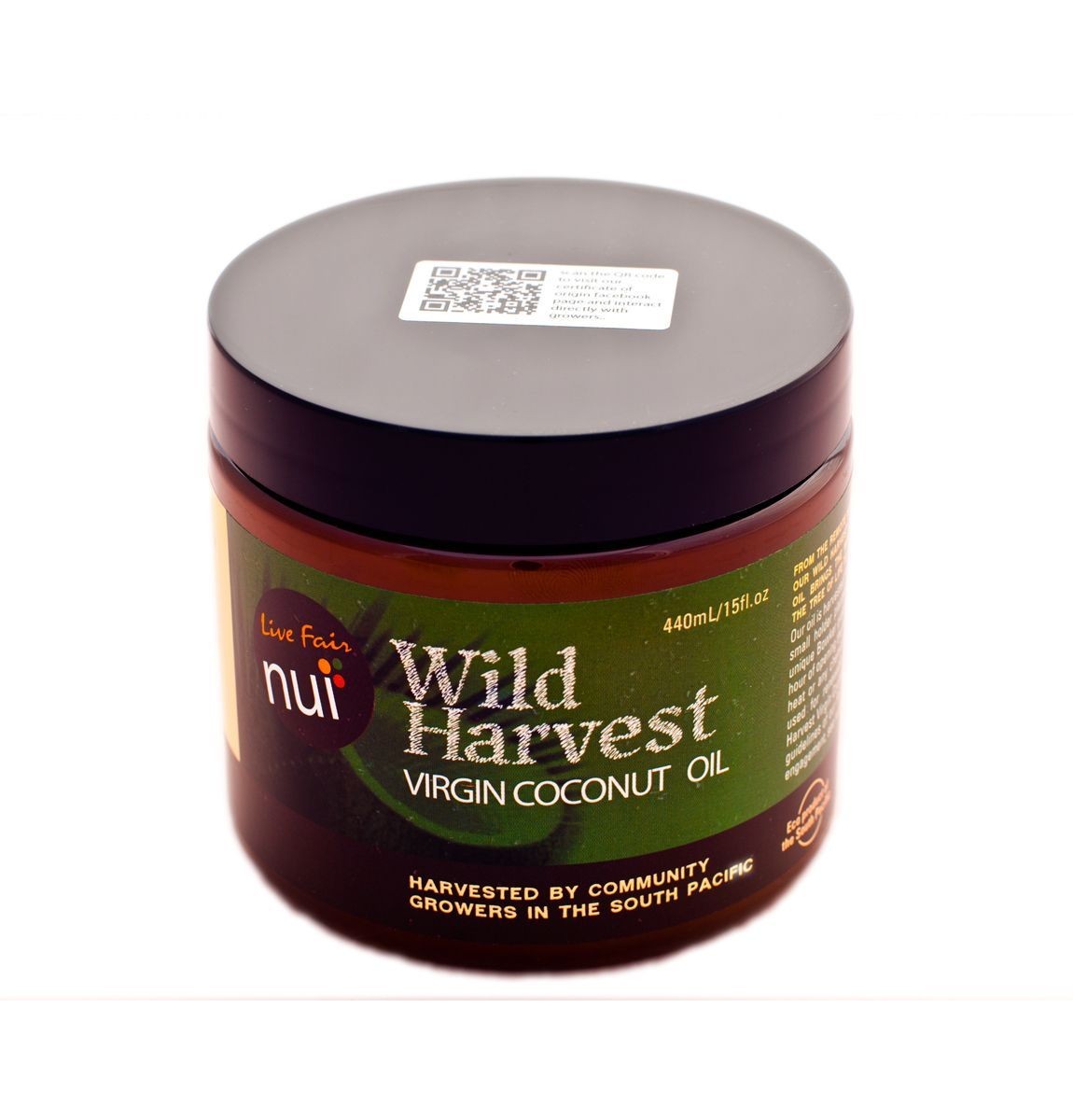
nuiI has discovered that the difference between extra virgin and virgin coconut oil is NIL.  Contrast olive oil whose "extra virgin" label denotes a better quality product and commands a higher price. No such distinction exists in the coconut oil industry. The addition of an "extra virgin" label to virgin coconut oil remains a marketing gimmick, rather than an indication of the oil quality.

 My 12 favourite ways to use coconut oil:

1. I use it to cook Asian/Indian meals (eg when stir frying onions and garlic).

2. I drizzle it on  potatoes (or sweet potato) chips/wedges before baking in the oven.

3. I sometimes add it to steamed veggies instead of or in addition to butter (especially when someone is sick in order to fight infection). Coconut oil, tamari, activated sesame seeds and nori strips can easily turn your cooked veggies into a quick Asian-inspired side dish.

4. I use it to make kale chips. Will post recipe in another blog.

5. I use it instead of (or in addition to butter) in desserts, cakes and muffins.

6.  I add a tablespoon to my smoothies (along with gelatinous beef broth, kefir and a banana).

7. I swirl a tablespoon in my mouth for 15 mins once or twice a day then spit it out for oil pulling. For information and benefits of oil pulling refer to one of my earlier blog here. I have now been oil pulling for exactly 1 year and my teeth are noticeably whiter. Many people have reported this (and numerous other benefits) since oil pulling. Say goodbye to chemically bleaching your teeth- yeah I'm looking right at you Marty!

8. I add a teaspoon to black coffee and blend with a hand held blender to make an incredibly delicious milk-like bullet proof coffee (without the dairy).

9. I use it as a body or face moisturiser. I don't exclusively use coconut oil as a moisturiser as it is not that deeply penetrating /moisturising for long term use.

10. There are numerous reports that coconut oil acts as a natural sunscreen. I haven't come across the scientific rationale of this (have you?) but the research I've read says that coconut oil works by preventing free-radical reactions which lead to all the consequences caused by overexposure to the sun. Coconut oil permits just the right amount of UV rays to allow for the necessary production of vitamin D. For more information on this click here.

11. It can be used as a lubricant. Goodbye KY Jelly. Moving right along...

12. I sometimes use it under my arms as a deodorant.Aclara_Health_-_Coconut_Oil_Organic_Extra_Virgin_Cold_Pressed__700mL_

How else do you use coconut oil?

My favourite brands of certified organic virgin coconut oil are  Nuis Aclara Health or It Works!

What brands of coconut oil do you like?

If you crave a food, then for God's sake just eat it!

IMG_5264I appreciate that there is a lot of well-meaning advice circulating the internet at this time of year about how best to 'manage' tempting party foods and beverages and how to muster enough willpower to not to get swayed off course.
I have a slightly different take on this.
For me, food is just as much a source of nourishment and fuel as it is a source of pleasure.  Food should never be a stressful experience. If denying yourself a certain food or drink is causing you stress, angst or resentment, then I think the psychological impact of that may very well be doing you more harm than the physiological  harm of the food itself. In other words, if you're craving it you're probably not ready to give it up (yet). Be kind and gentle with yourself and indulge if you really want it and try to just perhaps eat it less frequently or in smaller quantities. For me, I simply no longer desire any processed foods (including grains, desserts and sweets). Even naturally sweet or sweetened foods are very much in the "take it or leave it camp".
How did this happen? Over time and in 2 ways:IMG_5044
1. I simply crowded out the empty fillers, processed and sugary-laden foods. I filled up my plate and stomach with only nutrient-dense foods so there was simply no room for anything else. By the time I consume my daily dose of 2-3 eggs, bacon, kefir smoothie, 1/2 cup of sauerkraut, a cup or 2 of broth, a palm size serving of protein (eg fatty meat) at every meal, vegetables, plenty of water and good fats like butter and coconut oil.... Well there's no spare stomach real estate to allow any more in over the course of a day. I also make sure each meal is a really decent size so I feel very satiated afterwards. There's only so much volume that I can physically fit in so I've just filled that volume to the brim with the good stuff, effectively crowding out the empty /nutritionless stuff.
IMG_44722. As a result of number 1 above,  my taste buds over the years have changed and my sweet tooth 'miraculously' disappeared. The more and more I ditched sweet food and empty fillers, the more and more my taste-buds didn't crave that stuff. I no longer have a hankering for lollies, bread and sweets. I don't really like their taste or after taste, and I don't like the way those foods makes me feel afterwards. Over a period of years I found that it's the nutrient-dense foods that I'm drawn to because that's what our body is designed to thrive on. Give me another juicy lamb chop or an extra piece of bacon or eggs or avocado instead of toasted bread anyday.  Nutrient-dense foods are delicious! Why? It's because nutrients  (vitamins and minerals) are what gives food its flavour. Don't get me wrong - it took me years to get to this point. Years to overcome sugar and carb addiction. But once you get there there's no turning back because the benefits to your psychology and physiology are worth it.
So in response to the 5:2 diet that's trendy right now,  when some asks me "Soulla what would you eat if you could IMG_5309eat absolutely anything you wanted to for 2 whole days?" My response is "I would eat exactly the same foods that I eat the other 5 days because I find them delicious, satiating and nourishing." Much like a recovered alcoholic who can walk away from a glass of scotch without flinching, I can walk away from a packet of Tim Tams that in yesteryears I would have devoured in a heartbeat (and them some).
So here's what I think: if you crave it, just eat it and don't feel guilty about it. We already have enough to feel guilty about in life! Educate yourself about the food you're eating - what are the ingredients, where did they come from, what's been done to it, what effect does it have on our body and then listen to how it makes you feel afterwards. If you start to slowly and gently crowd out the 'bad guys' with nutrient-dense foods and trust that over time your taste buds will change accordingly, I bet you that at some point in the near future you won't crave the empty fillers or processed foods that you might now think you could never live without.
IMG_4208On a separate note, 2013 has been a huge year for me both personally and professionally with many changes.  As this year draws to an end,  I want to take this opportunity to thank you for your support and encouragement. Thank you to those of you who bought my products, attended my workshops or cooking classes, had personal consultations or simply read or commented on my blog and Facebook posts.  Thank you for being part of this vibrant community to which I belong.  And most importantly, thank you for allowing me to do what I love the most, to follow my passion and grow and learn personally and professionally. May 2014 bring you vibrant health, boundless energy and much joy and laughter. I'll be back in Bronte, Sydney, from 27th December open for business. I would love to see you then!IMG_9868

shopping at organic farmers market in Paris

The Rise of the Roosters

roosterstrophy Last year I worked with the Sydney Roosters as their nutrition coach to introduce them to a nutrient-dense traditional wholefoods diet as a means of giving them the cutting edge over their competitors. This involved getting down and dirty in the kitchen week after week with some boisterous 18-24 year olds to turn the conventional food pyramid on its head and re-educate them about the fundamentals of good nutrition.  Out with the sports gels, protein powders and refined carbs and in with the bone broths, pastured meats and chicken livers!! What transpired after 18 months was a transformation in the players’ health, fitness, performance and recovery times, ultimately culminating in their 2013 Grand Final victory – their first since 2002.

IMG_0557

When I stared work with the Roosters in March 2012 the boys would front up to cooking classes eating whitebread sandwiches, pasta and downing Gatorade (plus they brought with them a hefty dose of cynicism that diet plays very little role in athletic performance). Wind the clock forward to today and we have a completely different picture. The main staples of their now nutrient-dense diet include pastured eggs, whole full fat dairy, grass fed and finished meats, lacto-fermented foods like sauerkraut and kefir, organ meats (like livers, lambs brains and hearts), bone broths, wild seafood, coconut oil, and fresh seasonal fruit and vegetables. After all this is the very food that sustained our hunter-gatherer ancestors – the ultimate cross trainers- for the vast majority of our existence on this planet. Grains, legumes, refined carbohydrates, processed oils and the plethora of branded sports ‘foods’ are relative newcomers to the human diet. My dietary philosophy comes down to giving the body the fuel that it is biologically designed to consume so that it can perform its very best on every level.

IMG_0481

“The boys wouldn’t think of eating bread and pasta anymore” says forward player Marty Kennedy who, together with Roosters captain Anthony Minichiello have both embraced a traditional wholefoods diet as a lifestyle choice for many years. Indeed the stellar performances of both Kennedy and Minichiello served as inspiration for the rest of the players to adopt a similar dietary path. Kennedy and Minichiello take nutrition very seriously, paying scrupulous attention to the source and processing of their food, meal planning and strict avoidance of anything processed in any way, shape or form.

I recently interviewed Anthony Minichiello on his take on what contributed to the rise of the Roosters from 12th to 1st place on the ladder in the space of a year.

2013 saw the following 5 main changes to the Roosters:

1. New Captain (Anthony Minichiello).
2. New Coach (Trent Robinson) and a shake up in staff including Craig Fitzgibbon in a new role as assistant coach and Keegan Smith as the new strength and power coach.
3. Smarter and harder training regime. This involved greater tracking through GPS devices and building a greater strength and power base in the gym first before translating that to the field.
4. New members including Sonny Bill Williams, Maloney, Jennings and O’Donnell.
5. Each and every member fully embracing a nutrient-dense traditional wholefoods diet.

IMG_0549

Minichiello considers that while all of the above 5 factors helped to win the Premiership, in his view “Diet is the key factor of those 5 things. Diet plays one of thebiggest roles in fitness and athletic performance. Its affects are far reaching and influences injury prevention, speed of recovery from injury, sleep quality and mental clarity. The boys are more focused, the physiques of some of the players have noticeably changed since embracing nutrient-dense wholefoods, they are more toned, we got through the season with minimal injuries and there has been quicker recovery from injuries”.

Along with Minichiello and Kennedy, coaches Craig Fitzgibbon and Keegan Smith are on exactly the same nutritional page and started eating nutrient-dense foods themselves back in 2006-7. These 4 key people have been instrumental in passing on their nutritional knowledge and lifestyle choices to the other members. Fitzgibbon and Smith reinforce the importance of nutrition to the players on a daily basis. Smith in particular can take credit for his continual reinforcement of the nutritional ideas that Minichiello, Kennedy and myself implemented. “To change the mindset of the younger players and to shift them from a conventional diet to a nutrient-dense wholefoods diet requires education and constant reinforcement on a regular basis” says Minichiello. “Keegan provides nutritional lectures to the players and his role is now 2 tiered so that in addition to strength and power coaching it also covers nutrition as a separate dedicated role. Along with nutritional theory, we discuss practical issues like where the boys should shop to buy their food in the most economical way.”  Minichiello mentioned Grass Roosts Urban Butchery in Vaucluse and Kingsley Meats in Rose Bay.

IMG_0484

So it appears that the work I did with the Roosters in 2012 planted the seeds and 2013 saw the new captain and the new coaches nurturing those seeds and tending to a forest. But forests take many many years to grow, not just a few months or ever one year. Says Minichiello “All of the work that has been done to date….the cooking classes, the work by Fitzgibbon and Smith, the daily reinforcement, the answering of questions, the night time calls between players to discuss recipes….all of these things were stepping stones in the right direction and it just so happened that this year, 2013, was the year that everything came together and the boys finally got it and embraced it.”

I asked Minichiello how receptive the players were to adopting the new dietary regime. “It depends on the player and his state of health and fitness. It is not easy to get players to adopt a completely new dietary regime when there is no catalyst for them to embrace a change” says Minichiello.

IMG_0552

“If a player is in his mind fit and healthy, the motivation to change is hard.” Indeed the catalyst for both Minichiello and Kennedy to abandon the conventional food pyramid diet in favour of an ancestral diet was the dire deterioration in their own health. In the case of Anthony, his farm upbringing on raw milk, meat and fresh produce meant that he was injury-free for the first few years of playing professional football. Then after years of eating a conventional diet with “jelly-snakes before games and carb loading” his health started unraveling fast. The discs in his back started to dry up due to “a conventional diet, high impact sport and not resting enough”. This culminated in 2 discs rupturing, an inability to even dress himself and ultimately 2 operations followed by a serious neck injury. His surgeon was not optimistic that he would ever play sport again and said he had a very limited career trajectory. Desperation breeds creativity and what followed was a desperate search for answers. Anthony started questioning our entire food system and started talking to people with alternative health views such as Origin of Energy founder Aaron McKenzie. The next few years saw Anthony re-educating his body and his mind on what we are biologically designed to eat and how we are designed to move. MRI testing several years later showed that not only had his injuries vanished but that his discs were well hydrated. Anthony is injury-free, fighting fit and exuberates vibrant health and positivity. “My journey shows how nutrition plays a major role not just in sport but in everyday life, just to stay fit and healthy.”

Kennedy has a very similar story that led him to question the conventional food system. Earlier this year Kennedy returned to the field 9 weeks early from a knee surgery which typically takes 18 weeks torecover.  Kennedy attributes his super quick recovery time to his nutrient-dense diet paying particular emphasis on the joint and cartilage building properties of bone broths.

And what about the boys on the team that haven’t suffered major health set backs, that seem to think that they are invincible eating whatever they want? “Everyone on the team is now on exactly the same nutritional page” says Minichiello. “They know from the experience of others that refined carbs and processed foods will affect their health and shorten their footy career”. As the saying goes, you can’t out-train a bad diet.

Minichiello, now 33, is considered a veteran in his field with the average age of an NRL player being early 20s. “What do you attribute your longevity in your sport to?” I asked him. “100% to my diet” was Minichiello’s reply.

IMG_4326So what does the captain of the Roosters eat in a typical day during footy season?

Breakfast (pre training): shake made with any combination of coconut water/raw milk/yogurt/kefir plus ½ cup of gelatinous beef bone broth, raw egg yolks, coconut oil, and flavoured with either raw cacao powder, berries or cinnamon powder. Sometimes raw livers are added to the smoothie “I swear you can’t taste it!” he says.  When not heading off to training Anthony enjoys a leisurely bacon and egg meal for breakfast.

Lunch at stadium: leftovers from last nights dinner OR the organic food truck that delivers pastured meat and veggies to the Roosters.

Afternoon snack (post training): home made shake brought in from the morning. Sometimes some activated nuts.

Dinner: pastured meat (eg steak, pork belly, roast), cooked vegetables, salad and sauerkraut.  The only fats that are used to cook with are coconut oil, butter and beef tallow. No processed oils are consumed.  Vic Meats who are one of the sponsors of the Roosters also deliver grass fed and finished meats to the stadium for the players to take home for dinner.

Post dinner snack: 1 cup of beef bone broth or full fat yogurt with berries and sometimes a little raw honey.

To drink: filtered water with unrefined salt. Minnie rarely drinks alcohol. The Roosters have a policy of no drinking alcohol within a certain number of days of a match.

IMG_0496

“This is pretty typical of what all of the players now eat. It’s great to see the kitchen at the stadium being used so much and everyone eating more and more home cooked meals” says Minichiello. “When I first stated with the Roosters the fridge in the kitchen was always empty as the majority of the boys used to buy take away fast food for lunch. Now the fridge is full with home cooked left over meals and it’s almost impossible to find space” laughs Kennedy. With Marty Kennedy moving north to the Brisbane Broncos in 2014 the question is now whether the Broncos will be the next NRL team to embrace a nutrient-dense wholefoods diet? Marty laughs when we joke about this but I have high hopes.

When I asked Minichiello what role conventional sports foods play in his diet (eg Gatorade, protein bars, protein powders, synthetic supplements?) he laughed and said emphatically “NONE!”. “All the boys know that that stuff isn’t necessary and in most cases downright harmful so none of us touch it.  The only supplement I take is fermented cod liver oil” says Minichiello. It made me stop and think that the sports food industry has got millions of people worldwide fooled into thinking that they need to take marketed sports food, powders and drinks to be fitter, faster and stronger. And here we have some of the fittest, fastest and strongest athletes on the planet who went on to win the NRL Premiership without supplementing with sports foods/drinks. Surely the average man in the street can do a few gym sessions a week or compete in the odd marathon without it?

So what does 2014 hold in terms of tweaking the nutrition plan for the Roosters? IMG_0475

Minichiello says that he’d like to look into the lunch truck more closely to ensure that the food is “100% clean” and similarly post game catering needs to be re-examined. Minichiello acknowledged the quandary that food sponsorships provide when those sponsors provide conventional food.

It’s been an incredible journey to witness the stellar improvement in the health, fitness and performance of the Roosters’ players this past year.  Kudos to the Roosters’ coaches and staff for taking onboard the monumental challenge of encouraging the boys to make the shift from a conventional diet to a more nutrient-dense wholefoods one, ultimately giving the team the competitive edge that contributed to their 2013 Grand Final victory. And hats off to each and every player for being receptive to changing their diet and embracing an unconventional one. I look forward to seeing more great things transpire from the Roosters in 2014!

roosters-emblem