The Art of Softening (and the 10 ways that I have softened)
Guest User
Hey sister, haven’t your heard or felt of a special kind of global movement that is afoot? A movement where women the world over are tapping into their feminine (and still climbing corporate ladders without being the stereotypical ball-breaking executive who leaves a trail of devastation in her wake). A movement where women are recognising their divine power (rather than always playing small), and acknowledging their sexiness (rather than hiding it or being ashamed of it).
As an A-type personality, uber driven, organised and ambitious person, who always excelled at anything I put my mind to, “soft” is not a word that would ever have been used (either by myself or anyone else) to describe me. Up until recently. “Soft” conveys weak, flaky, fluffy, flighty and ineffectual. Or does it?
A few friends have commented recently “Soulla, you’ve really softened”. Whilst in the past I would have been affronted by such an observation, today I see it as nothing short of the greatest compliment. A beautiful yin counterbalance to my raging yang. A sign of stepping into, and celebrating, my feminine, while simultaneously holding fort as an entrepreneur and business woman. How did this happen? Like most profound changes in life, it happens slowly, and gradually, until it morphs into every aspect of your daily life, typifies your actions and thoughts, and eventually becomes a way of life.
One of my close friends, recently summed up her realisation of her greatest frustration with herself: “I’ve hardened. I constantly yell at my kids, I’m short-tempered. I’m bossy. I’m exhausted. I’m constantly frowning. I would be unattractive to any man right now. I’ve become too hard.” I’ve walked in those shoes. For most of my life. And many 40-something year old women that I interviewed confessed feeling exactly the same way. On a scale of 1 to 10 (with 1 feeling “soft and feminine”, and 10 feeling “hard”) almost every woman that I spoke to ranked themselves higher than a 6. And they were not happy about it.
Being hard, it seems, it not something that the women of today want to be. And not something that I would have thought our male counterparts find particularly attractive.
Even a cursory perusal of social media streams and print media clearly show that more and more woman today are embracing, or wanting to embrace, their femininity, and take a gentler, softer approach.
How did we women get to become “so hard”? How did we dial up our masculine energy at the expense of the feminine? While the Germaine Greer feminist movement in the latter half of the 20th Century may have served an essential purpose of catapulting women out of social inequality, did it land us at the far extreme of the other end of the spectrum, competing with our male counterparts as one androgynous species? Or has the breakdown of the tribal communities of yesteryear created a society ill equipped to deal with the feminine (gatherer) and masculine (hunter) roles? Or have we women lost our way in the busi-ness of modern life on a quest to be all things to all people wearing multiple hats (especially the single mums among us)? Or have we women simply lost a connection with ourselves and our very essence– our divine feminine- that trickles down to all aspects of our lives? Or perhaps it a combination of all of the above? Whatever the reason, it is clear that the modern woman of today seeks a more balanced middle ground where she can relish in being a feminine goddess and all that that entails, while simultaneously holding space as a powerful force of nature, creating and embellishing greatness and using her powers discerningly and only for the greater good.
Below are 10 things that I have instinctively (rather than intentionally) used that made me “soften” and tap into my divine feminine over the past few years:
1. Softly closing the door on toxic relationships

Frida Gustavsson photographed by Benjamin Vnuk
There are times when we need to close the door on relationships with people who cross our boundaries, affront our values, no longer respect or love us, or no longer enrich our lives. Most of us at some point in our lives have had relationships with people who leave us feeling utterly drained of energy or yuk inside, or we sense that they are trying to drag us down, or belittle us at every chance. If a relationship isn’t serving you, it’s ok to gently close the door on it. If you don’t, the consequence is a disconnect which hardens you. It’s hard to feel soft, feminine and open when you are feeling stressed, belittled, violated, disrespected or drained. You close up, and harden, to protect yourself.
The key here is gently and lovingly closing the door on that relationship. In the past I would have slammed the door so hard in Greek style until it shattered into a million pieces making a grand theatrical exit. I’m not proud of the way I have exited certain relationships. It takes much courage and a strong sense of dignity to be firm yet gentle with people who no longer serve us.
In place of relationships that no longer serve me, I have sought out and befriended people who add so much love and value to my life. People who enrich me no end. Women who are not afraid to speak their truth, be authentic, inspire others and unashamedly express their divine femininity.
You are a reflection of whom you befriend and your friends are a reflection of you. As I say to my children, chose carefully, and be attracted to those who inspire, uplift, and enrich.
In my day to day life I am making a concerted effort to greet all people like long lost friends – with an open heart, a huge smile and a meeting of the minds. When you greet complete strangers in this way your approach is infectious and it spreads a lighter, softer and happier energy throughout the world. We might not agree with everyone’s point of view or life philosophy, but we can respect it and in them find things to admire.
2. Finding your life’s purpose

While connection with kindred spirits is important (as set out in point 1 above) a connection with oneself is first and foremost paramount. If you feel disconnected with yourself, you are standing on rocky ground. It is more difficult to seek out people who you feel a connection with because you don’t even know what you stand for or what makes you tick.
Being unhappy in your job hardens you. It’s hard to feel soft and feminine when you are feeling stressed or unhappy with your work. When you are doing something that you love and feel connected with, you can unleash your love and light on the world and shine bright. If you can’t leave your job for the moment, focus on the parts about it that you do love- something must have attracted you to it in the first place. Put strategies in place to transition over time to something that you find a greater connection with. Or seek out hobbies and interests outside of work that you have a strong connection with so that that aspect of your life is nurtured. From that space, larger things may bloom. Reach out to organisations that you want to work for. To share a story close to my heart, one of my friends once volunteered to work for her dream company in her dream role as they had no paid role for her, and then when she proved how amazing and indispensible she was, they created a role for her and she worked her way to the very top over 10 years. Where there’s a will there’s a way.
3. Softening into nutrition

Softening into nutrition means eating what I want, when I want, according to the dictates of my body. When you really become attune with your body and listen to its cues, you know what it needs. It might need more carbs (I opt for root veggies like baked potato chips), or more fat (upping my butter intake or having pure cream for dessert might do the trick), or more protein. Heck, I might need chocolate (the best quality raw dark chocolate of course rather than the cheap crappy variety).
Softening into nutrition doesn’t mean that I eat junk food. When you view and treat your body like a temple, and come from a place of self-love and self-respect, then you don’t abuse your body. Instead you respect it and nurture it and want the best for it. You don’t want to fill it up with junk food (junk food is called that for a reason- it’s junk!!). I view junk food (which includes all processed and nutrient-devoid foods) as rubbish and not as real food so it wouldn’t cross my mind to eat it. It was a journey to get to that place though and to discover and create healthy swaps. Food is not just a source of nourishment and energy, it is also very much a source of pleasure. So if a certain “food” genuinely gives you pleasure and makes you feel good (and be honest with yourself here) then if you crave it for God’s sake eat it, because you’re probably not ready to give it up (just yet). Softening into nutrition doesn’t mean throwing caution to the wind and eating gluten if you’re a celiac, or eating foods that will set back your medical or digestive condition. That’s self-sabotage, not softening into nutrition.
Softening into nutrition means that I don’t beat myself up if I overeat nutritious food on occasion. Softening into nutrition means that as much as I try to avoid gluten (even though I don’t have the celiac gene), the occasional consumption of smallish amounts of sourdough bread is not something that I now flinch over at all (and I can tell you that there was a time at the start of my traditional wholefoods journey when for 2 solid years not a single grain ever passed my lips). Softening into nutrition means consuming small amounts of foods I wouldn’t ordinarily eat in the context of being social or gracious if a family member or friend has lovingly cooked a meal for me.
Softening into nutrition means that I certainly don’t ever punish myself through starvation, or skimping on meals or gorging myself until I feel sick. It means never going to those extremes. It means that I eat 2 to 3 solid nutrient-dense meals a day meals according to the dictates of my hunger. Softening into nutrition means never feeling stressed or anxious about food. It’s being in a healthy relationship with food and making food and the preparation of it an immensely enjoyable, pleasurable and nourishing experience, on every level.
Softening into nutrition means for those of you who have not already done so, finding a connection with the food you are eating: being vitally concerned with the source and processing of it and learning how to properly and lovingly prepare it (rather than exclusively outsourcing this integrally feminine role).
4. Softening my mental chatter with positive thoughts

I have blogged about the importance of embracing a positive frame of mind most recently here as well as here. What you say to yourself is so critical to the way you view yourself and life in general. Changing my inner dialogue from largely negative to largely positive has had a huge impact on making me feel happier, softer, and more feminine. My self chatter used to be like a war zone. Us woman can be so damn hard on ourselves. When we are hard on ourselves, we harden. Beating yourself up with self talk like “How on earth am I going to get through the thousand things I need to do right now; no one is helping me; I can’t believe how much laundry is produced by this family; here we go AGAIN with school lunches; what the hell am I going to cook for dinner; why can’t anyone pick up after themselves around here; I’m such a failure; is this ALL I have achieved in life; nothing I do turns out right; I’m never going to find a partner etc etc ” only serves to make us feel resentful, unhappy and hard. Catch yourself when you say these things and swap all the negative chatter for positive thoughts as I detailed in my blog here. And when disaster strikes, instead of opting for a doom and gloom woe-is-me victim mentality try to find the life lesson in it and what the universe is trying to teach you as I detailed in one of my previous blogs here.
5. Softening my view on my body image
This is a huge topic worthy of an independent blog post in its own right which I will write one day. But suffice to say that the way we view our body image is intricately related to our relationship with food (point 3 above), which in turn is intricately related to our relationship with ourselves (point 2 above) as flavoured by our inner dialogue (point 4 above) and the company we keep (point 1 above). It all stems back to this: if you don’t love yourself you’ve wont ever be happy with how you look in the mirror no matter how toned, thin or svelte you are and no matter if everyone else is telling you how freakin’ awesome and sexy you look. It will fall on deaf ears. Even if you are underweight you will insist that you are fat or overweight or need to lose a few kilos. I am health coaching a few clients at the moment with this very issue and I can relate wholeheartedly to them because I used to walk in their shoes. I used to be obsessed with having a flat stomach, a thigh gap, measuring the circumference of my inner thighs and being ridiculously thin (to the point of losing my period). Unsurprisingly I had a horrific relationship with food -it would pervade my every waking (and often dream-state) thought to the point of becoming stressful and painful- and I would oscillate from binging to starving myself. The bathroom scales ruled by life and my daily measure of self-worth would be the number that it showed every morning like a judgement handed down declaring me either guilty (if the number was great than 50kg!!) or innocent (anything that started with a 4).
When we have rigid and unrealistic views on what we should look like in the mirror we can’t possibly feel soft and feminine as we are constantly feeling disappointed with ourselves. We harden by becoming stressed and embittered. We become jealous over those with more coveted bodies (thinking how happy we would be if only…).
Looking back now I can’t even relate to the person who I was - that 48kg woman standing 168cm tall. She is a far cry from who I am today but letting go of her meant closing the door on a toxic relationship with a friend who was fuelling this fire (point 1 above). It meant learning to love myself wholeheartedly again and pouring my energies into meaningful, soul-enriching work (point 2 above) and cultivating a healthy and sustainable relationship with food (point 3 above).
Softening my view on my body image means that:
I no longer own bathroom scales so I no longer weigh myself (because when you weigh yourself all you are weighing is your self esteem)
I have no idea how much I weigh and I really don’t care as the number is completely irrelevant to my health and happiness
I can look at myself in the mirror (which happens occasionally) and think how healthy and fit I look for my age having had 2 kids
I do not give a rats arse about thigh gaps or a 6 pack. If these are the natural consequence of eating a wholefoods diet and leading a fit and healthy life, then kudos to you sister! But they are NOT a coveted goal in and of themselves
I embrace my curves
I confidently know that if I eat 2-3 solid nutrient-dense wholefood meals a day in the context of an active lifestyle with plenty of pure water and sleep, I will certainly not become overweight. Ever.
I wear what ever I want (usually what makes me feel most comfortable).
Hallelujah sister! What a blessed relief to let go of that baby!
6. Softening the lighting in my house at night with amber lights

I grew up with fluoro lights on full tilt at my parent’s house. Think of a supermarket and you’ve got the picture. My parents can’t stand dim lights. Bright lights, day and night, is all I’ve known. So when I set up my own house at 23 and right up until recently, on when bright lights, all over the house once it got even slightly dark. Right up to the point of bedtime, when I then expected my bedazzled body to instantly fall asleep.
I used to think my friends who were all into blue blocking glasses and amber lights were too OTT. They had replaced most of the blue light bulbs in their house with amber light globes, put special blue light blocking filters on all their screens and the very minute the sun goes down they would put on their blue blocking ezekiel glasses (“blue blockers”). I would roll my eyes. I mean, really? This is too much, I used to think.
Then more and more research would fly my way about the importance of sleep. Ok, I get that sleep is absolutely fundamentally important to our health so much so that it is relegated to what I call one of the 8 foundations of health. I know that you can make an animal or human insulin resistant simply by sleep depriving it, without changing its diet at all. Sleep is profoundly powerful. And both the quality and quality of it count. I personally skimped on sleep for a very long time at various points in my life, and saw the impact it had on my health. Nowadays, I’m very precious about my sleep. It takes number 1 priority over my evenings and unless I’m health coaching or running a workshop I’m pretty much in bed with my kids at 8pm. And loving it. I could smash out more blogs, have published 5 cook books by now and have umpteen online programs if I squeezed an extra few hours of work into my evenings but I have chosen, instead, to sleep. That’s how damn important it is to me.
But what I didn’t fully appreciate was this: the light that is emitted in ordinary artificial light bulbs around your house contains blue light (even though it doesn’t look blue to the naked eye). This blue light interrupts our circadian rhythm by suppressing the sleep hormone melatonin, thus thwarting our ability to fall asleep as the body thinks it’s still daytime. Historically, prior to the invention of electricity, our ancestors would sit by candle light (which emits low amounts of blue light) or they would simply sleep after the sun went down. Our ancestors honoured the rhythm of nature and the daily cycle of rising with the sun and sleeping with the sun. So if you take the view that sleep – and circadian rhythm- is fundamentally important to our health, then anything that hinders or disturbs that – like artificial blue lights at night- is something to be taken very seriously. Even if exposure to artificial light does not effect your ability to fall asleep, and hence you think you don’t need to protect yourself with blue blockers and amber lights, then think again. A study published in PubMed showed that “light at night markedly increases the growth of human breast cancer xenografts in rats. In humans, the theory that light exposure at night increases breast cancer risk leads to specific predictions that are being tested epidemiologically: evidence has accumulated on risk in shift workers, risk in blind women, and the impact of sleep duration on risk. If electric light at night does explain a portion of the breast cancer burden, then there are practical interventions that can be implemented, including more selective use of light and the adoption of recent advances in lighting technology and application.”
So I started, slowly, reducing night time exposure to artificial light by making a few sleep hygiene changes. I started replacing a few of the light globes around the house with amber light globes, I started wearing amber coloured blue blocking glasses at night, and I invested in a few salt lamps that give off a gorgeous amber glow instead of turning the lounge room downlights on. If nothing else, the house now looks aesthetically beautiful at night with a soft amber hue. Unwittingly, through these soft lights, my nervous system started softening as I started getting used to this visual “softness”. But the clincher came when I would inadvertently expose myself to artificial white light at night without my blue blockers - the brightness of the artificial light would be so intense I can not describe it as anything other than disturbing. Disturbing to my nervous system. Akin to someone playing really really loud music, or screaming in my ear. The shock wired me up, harden me and left me feeling rattled. I didn’t expect this. Just like junk food, I didn’t like how it made my feel, once I had experienced the alternative. But unless and until I experienced the alternative, I didn’t know any better. All I can say is check it out for yourself. Don’t turn on any artificial white lights at night for a good month and then see the difference to your mood and sleep.
7. Playing soft music before bed

I love dancing and bopping away to Top 40 but once I’m home from work I go into wind down mode. Smooth tunes, vintage piano, classical or anything that isn’t stimulating serves to soften, soothe and calm.
8. Softening with essential oils

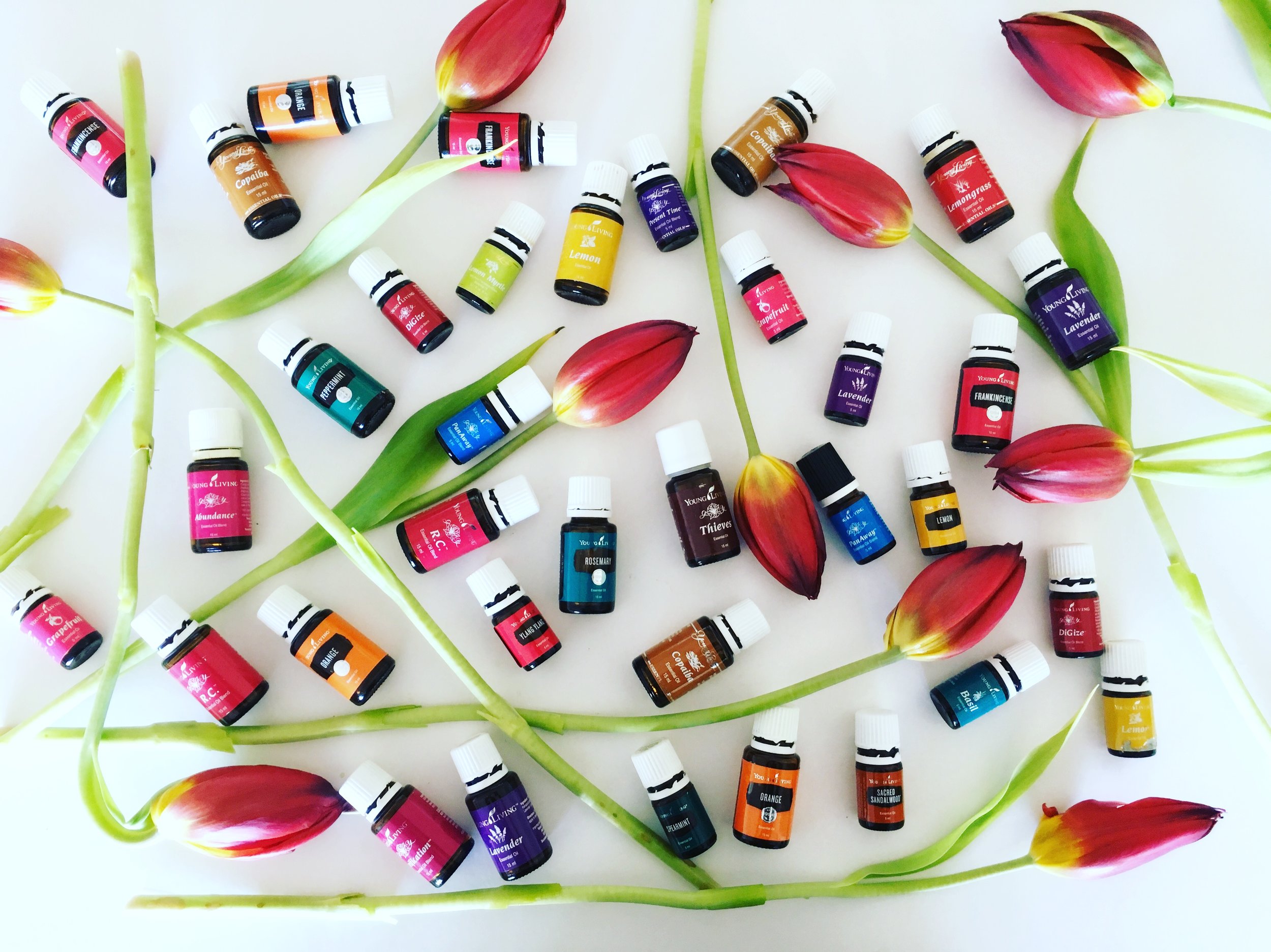
I will never hang my hat on any one thing (as there never is one panacea), but since I started using Young Living essential oils daily (as face moisturiser with olive oil, to diffuse in the house, as a household cleaner, occasionally in my food, and on soles of my feet when I’m feeling a bit sick) I have felt so much calmer, happier, and healthier. My emotions are more on an even keel with fewer lows. My skin is glowing like never before and my kids are so much more chilled out. There’s less fighting, yelling and screaming in my house.
Essential oils are what I call nature in a bottle. They are a powerfully potent extract of the life force of the plant and without them the plant wouldn’t exist (hence the term “essential”). Essential oils like Lavender or the blend Stress Away have a powerfully calming effect on your mental state, taking the edge off stress and anxiety. When I diffuse them in my house they immediately whisk me away to “chill out land”. And when I’m about to enter into something I find rather stressful - like sitting through a piano practice with my kids- the conversation might go somethinglike “Mummy is going to diffuse some lavender oil this afternoon because mummy really doesn’t feel like screaming her lungs out at you.” And for some reason, the oils really work. They calm my nervous system and mummy’s piano temper tantrums have all but subsided. Much to my kids’ (and neighbours’) relief. I still throw the occasional wobbly (Greek-Cypriot tempers die hard) but not on the same scale and frequency as in times gone by.
As an aside, I am very frequently asked why I chose Young Living essential oils. Simply put, it is because independent research shows time and again that they are of the highest quality the world over. Putting aside that they are the largest essential oil company in the world, they are the only essential oil company in the world that own all of the farms where their oils are harvested so they have total control and visibility from “seed to seal”. As I am extremely cautious with what I put in and on my and my kids body, I always seek out the very best quality- whether its food or personal care products. Like food, not all essential oils are the same! To purchase these oils (which are the purest and the most powerful on earth) and become a wholesale customer with 24% discount refer to this blog here. Treat them like a powerful medicinal tonic, as that is what they are. A little goes a very long way.
9. Softening my exercise regime

I used to be hard core about doing intense exercise 3-4 times a week. I used to beat myself up about missing a class and fear of instantly blowing up like an air bag. Looking back, I spent most of my time when I was training in that way in a state of acute neck and shoulder pain. I also started looking and feeling more masculine and less feminine with larger biceps and traps and more bulky muscles in general. It wasn’t at all the fault of the PTs or the gyms - it was me overdoing it and overtaxing my already overtaxed muscles. I have also overdone yoga numerous times, because of over pushing myself, resulting in breaking bones (yes, even in a yoga class). The point is not the exercise itself but how you approach it. What I really needed was more gentle exercise to nourish and restore my body, not rip it apart and stress it more. The type and intensity of your exercise really needs to suit your body and where you are at in your life. If you are going through something extremely stressful and already doing lots of functional movement through day to day life (like setting up a retail shop with 13 staff… just sayin’), then frequent and intense exercise will simply be an extra stressor on your already stressed out body.
Choose exercises that you genuinely enjoy and make you feel good. If that’s interval training, then awesome. Do not exercise out of fear of what may happen if you don’t do it. Walking, rock scrambling, rock climbing, yoga, dancing and fascia release suit me perfectly. But everyone is different. I haven’t done interval training in years now, and guess what, even though there are parts of me that really miss it, I am gentle enough with myself now to know that at this stage of my life it just aint gonna work with what I have on my plate, and that I can function well without it, and look and feel great if I get in some stretching, fascia release and walking on a regularish basis.
10. Spending time in nature

You can’t help but become more gentle, softer and connected with yourself when you connect with mother nature. Whether it’s the beach, a coastal walk, a bush walk or even a long stroll through a beautiful park, spending time outdoors is like hitting the reset button, because, fundamentally, nature is where we belong.
Spending too much time indoors, wires and hardens us. Notice how your energy instantly changes when you step outside. If you work indoors, try to have your lunch outside in the sun and spend as much of your leisure time outdoors. If you can’t spend as much time in nature as you wish to, then bring nature to your house. Fill your home with plants (do this even if you do spend a great deal of time in nature!). Not only does your house take on a softer, greener and more beautiful dimension, caring for plants is a very nurturing (hence feminine) role and watching them grow and thrive is hugely satisfying. Boston ferns (these absorb moisture), Peace Lilies (these siphon off VOCs), Sansevieria aka Mother in Law’s Tongue (a potent oxygen producer at night), and Fiddle Leaf Fig trees (which look freakin’ amazing) are what I have mostly filled my house with. “It looks like a jungle in here”, observed my 11 year old. “Then mission accomplished!” I replied.
I guess what each of these 10 points have in common is this: they are all guiding us to live a life that more closely resembles how we are designed to live. When we minimise the gap between our biology and our environment, we can function properly, perform our best and reach our true potential. We can become better versions of ourselves. We start to feel more connected with ourselves. And as females, if our very nature is to be soft and feminine, we can better connect with that side of us.

I hope you found this post insightful. I’d love to hear your thoughts on the above and any other ways that you have softened and tapped into your feminine.