Contact Star Anise Organic Wholefoods
 

Please use the form on the right to contact me!
I will get back to all enquiries as soon as possible.

Soulla x 


123 Street Avenue, City Town, 99999

(123) 555-6789

email@address.com


You can set your address, phone number, email and site description in the settings tab.
Link to read me page with more information.

Blog

This blog started as a way for me to share my recipes + culinary adventures, tips for vibrant health + happiness, thoughts on the latest developments in nutritional medicine + the low down on the Sydney wholefoods scene and beyond...

FREE WORKSHOP on swapping out conventional personal care products, household cleaning products and pharmaceutical products with non-toxic eco-friendly (yet powerful) products 

Guest User


We know that our hard coded genes are only responsible for a very small fraction of our health and that our health is largely dependent upon or influenced by a number of different environmental or lifestyle factors. The 2 broad categories of environmental or lifestyle factors that influence our health are:

  • Nourishment on the one hand; and
  • Toxins on the other hand.

These 2 factors have such a profound effect on our health that they actually switch our genes on and off for better or for worse and can thus change the expression of our and our loved ones’ genes (read more about epigenetics in my blog post here). This is why we need to be concerned about increasing nourishment and decreasing toxicity whenever it’s within our control. 

One of our lifestyle choices is what we choose to eat (our diet). That food can either be well sourced, properly prepared and nutrient-dense (nourishing) or processed (toxic) and thus has a profound effect on our health (which is why I’m so passionate about it). But food is only one component of health. What we put in and on our bodies in terms of personal care products and household cleaning products is just as, if not more, important as food, because what we put on our skin and breathe into our lungs goes directly into our body with no digestive filter. Most of the ingredients contained in conventional personal care products and household cleaning products (and even dare I say some of the organic ones) are questionable at best or toxic at worse. And we know that toxins cause inflammation and are the root cause of all modern disease. And here we are slathering and spraying them onto our and our kids’ skin, hair and nails, and inhaling them in.  

On Saturday 15th September 1-4pm I will be running my next free workshop to show you how easy, simple and cost effective it is to healthy swap conventional personal care products and household cleaning products to create a toxic-free home environment for your family. I’ll also explain how to healthy swap conventional pharmaceuticals with safe, yet powerfully effective, alternatives (this is very empowering as a parent!). I will show you how you can turbo charge or enhance the 8 Foundations of Health to take your and your family’s health to the next level and how you can add a beautiful energy and spirit to your home making it a safe, inviting and comforting sanctuary. 

There’s no time like the present to start increasing nourishment and reducing toxins in your home environment- the one environment that you CAN control. 

To learn more or to book click here

I loved the workshop and have been thinking of essential oils ever since and am wondering how I have gotten by without them all this time. I have been chatting and building excitement around the products since the workshop. I’ve been mentioning them to friends and work colleagues too. I found the workshop extremely informative and great that I got to experience the products first hand with the tea and chocolate as well as applying the oils. I definitely would consider attending another workshop, especially after using the products again. I’m sure I’ll get even more out of another session. Thanks for your enthusiasm and generosity of your time
— Helen
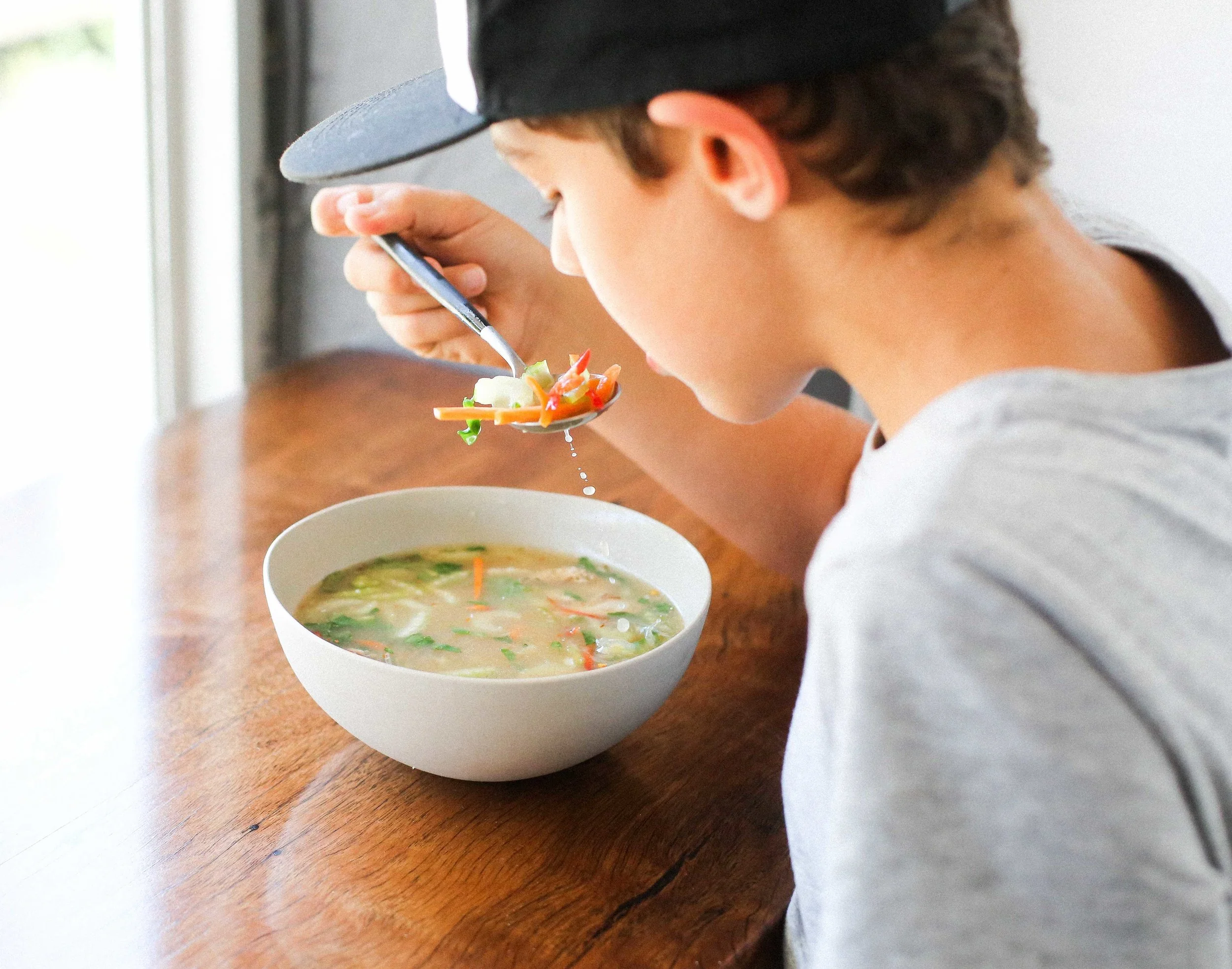
Soulla, thank you SO much for creating this amazing family. Thank you for the incredible work you do and for bringing so much joy and excitement into my life. I’m forever grateful to you for sharing your knowledge on food and diet & the 8 foundations of health. Your bone broth workshop has made my life SO much easier....I am so grateful to have come across the oils and your workshops and the challenge of then going on to host a gathering of my own & the pride and satisfaction of actually doing that. It brings me such comfort being able to connect with like minded mummas & not feel like a stranded person who is stuck at sea doing all this ‘crazy’ stuff (that I have no intention of stopping cos deep down I know it’s right). I seriously sat on that table yesterday eating that sensational soup just smiling. It was such a wonderful day and all of these people just blow my mind. They’re so beautiful and so friendly and then I got to shop at broth bar on the way home and fill my cupboard with all nutrient dense goodies! I can’t thank you enough 🙏
— Kerry
 

10 Mantras for a more peaceful life

Guest User


Challenges and setbacks are an inevitable part of life but it’s how we respond to them that defines us. There are numerous forms of stress management techniques we can use to help us create more peace and calm in our lives like meditation, yoga, spending time in nature, walking, tai chi, qigong, tremor release, fascia release, laughter and vigorous movement. But what do you do in the heat of the moment when the shit hits the fan and it’s not practicable or feasible to do any of the above? What if you’ve had an accident or just processing some devastating news or your child is throwing a massive tantrum in public or you’re about to walk into a confrontational meeting? That may really not be the time or place to whip out the yoga mat or lay on the floor and start tremoring or foam rolling or sit cross legged on the floor and start meditating. In the heat of the moment or whenever you feel overcome with anguish, we can rely on mantras to help us through. Simple phrases that can be said silently inside your head anywhere at anytime without anyone knowing that can act as an anchor point to bring presence and perspective to our lives. 

There’s a Sanskrit phrase “yad bhavam tat bhavati” which means what we think we become. This is testament to the immeasurable power of our thoughts. Your brain believes whatever you tell yourself which is why we need to be mindful about our self talk. Just like food, we can train ourselves to healthy swap those damning, critical thoughts often playing on autopilot with healthier, more positive ones.

I share below some of my favourite mantras that I commonly use that have helped me get through challenges and set backs: 


1. “You are exactly where you are supposed to be”


I started using this phrase about 5 years ago shortly after I separated from the father of my children after a 17 year relationship. I remember extolling in sobbing song and verse to a friend the bitter hardship of that period as I was trying to re establish my life. After listening to my wailing woes for a good fifteen minutes she replied simply with “Soulla, you are exactly where you are supposed to be.” This one phrase stopped me dead in my tracks. I didn’t appreciate it at the time, but I had to go through every trial and hardship to become the person I am today. 

Everything happens for a reason even though at the time we might not appreciate why and think life is bitterly unfair, sinking into victim mentality. But hindsight is a wonderful thing. When I look back on every setback and challenge I have experienced in my life I can see the lesson I had to learn or how my life was later all the more enriched for it. 

When things are difficult I tell myself  “I am exactly where I am supposed to be” and just saying this over and over gives me a measure of reassurance that all will be ok. 

2. “Just Breathe! Breathe! Breathe!”


Ok so I pull this one out when the shit really hits the fan. In those painful moments when everything falls to pieces in a split second and you feel your world collapsing around you and you know it’s going to get really really ugly. Like when you’ve lost ALL your points on your drivers licence, you’re on a 12 month good behaviour period which involves zero scope for errors or it’s sudden death, and with just a few weeks to go to the end of the probation period you get pulled over by a cop. You feel the blood pulsing  in your veins, your heart is pounding so hard you think you can hear it, your body temperature increases, your sweat glands pump and you feel like fainting. Yep, those moments. You know the ones I’m talking about. All I  can do in those moments is to remind myself to just breathe, for there ain’t anything else I can physically or mentally do. Just breathe. I resort to the most simple and foundational act we can all do: breathe. And when I realise I’m still alive after that one breathe, all I can do is take a second breathe, then another. It’s as though there’s no scope for anything else, but just to breathe. 

Dr Libby Weaver in Rushing Woman's Syndrome articulates how the breath is the foundation pillar of calm. "The breath is the only way we can consciously affect our autonomic nervous system (under subconscious control). This is why it is the crucial strategy for cultivating calm. If your breath leads, your body follows. Nothing communicates to every cell of your body that you are safe better than your breath. If you breathe in a shallow way, with short, sharp inhalations, then you communicate to your body that your life is in danger. Long slow breathing that moves your diaphragm communicates that you are safe.”

047fa2022a683469cece79f36625e1c5.jpg

3. “I am refusing to rush”


I often find myself running around (quite literally) as if each task I’m undertaking is a relay race and I’m sprinting hard to hand over the batton like my life depended on it. I learnt this from my mum, the highly industrious bee that she once was, watching her run from laundry to clothes line to kitchen like she was being chased by a sabre toothed tiger. When I find myself or my mind racing with “I have to do this, then that, then this” I stop myself with “I am refusing to rush”. It immediately slows my racing mind down and my body follows. 

I have noticed that others around me benefit too when I use this mantra. When I cut yourself a bit of slack and become easier on myself, I become easier on other people (especially my kids!). 

5994ba8b770d14141bb0e075eca23c75.jpg

4. “I am enough”


I pull this baby out when that tape starts playing in my mind that goes something like: “Is this all I have achieved [today/ this week/ this month/ this year/ in my life]? Why haven’t I written that damn cookbook yet? Why am I so slow at fulfilling my goals? Look at everyone else shining so brightly and killing it- what’s wrong with me? I haven’t ticked off a single thing on my to do list today, no wonder I’m so hopeless”. Yep, you know that ol’ chestnut. I then gently remind myself that “I am enough”. Just being me is enough. I have done enough, I have created enough, I AM enough. 

5. “This too shall pass”


I think this mantra is of Buddhist origin, denoting the impermanence of life- meaning that everything is transitory and nothing - the good, the bad and the ugly- lasts forever so it’s futile to cling onto strong emotions as they are fleeting. 

I remember using this mantra often after my son was born and I was pacing up and down the hall way rocking him in my arms as he was crying uncontrollably and I had no idea why. AIl I could offer myself in those moments of frustration and anguish was a reminder that  “This too shall pass”. And of course it always does. 

6. “Surrender is the greater meditation”


As a former control freak, I have learnt the need to surrender to what i can’t control and to make peace with it. 

As in the famous Serenity Prayer “God grant me the serenity to accept the things I cannot change, courage to change the things I can, and wisdom to know the difference.” It’s surrendering to what we can not change that gives us the serenity and peace we all deeply crave. 

You’re not going to be able to control everything. If you can’t control something, surrender to it and trust that everything will divinely unfold as it should. 

d4e36941377843a0262a6536abf9ed0b.jpg

7. “This is nothing I can't handle”


I picked up this little gem which packs a punch from meditation teacher Tom Cronin. When a set back happens I’m quick to dust this mantra off. Immediately responding with “This is nothing I can’t handle” sends a clear and powerful message to your brain and body that you’ve got this and you’re matchfit for the challenge. 

I also use this mantra as a precursor to a meeting or event that I think might potentially be stressful. In fact I use it every day just before I open my letterbox. Let’s face it, nothing good ever comes from mail these days- its either a bill, fine, rates, eviction notice, or a letter from the council telling you that one of your neighbours is building a monster house that will entirely block your view and send dust and noise your way for a good year. Just sayin’.. So before I open that letterbox, I pause. I take a deep breathe and I tell myself that there’s nothing in there that I can’t handle and I proceed. 

I also tout this mantra when my kids complain of something that takes them outside their comfort zone or makes them feel anxious. I respond with “yeah, but that’s nothing you can’t handle”. It gives them the confidence to believe  that they can handle whatever comes their way. 

8. Just do the next right thing

 
When overwhelmed with a million and one things to be done or a massive project that feels insurmountable,  I tell myself to “just do the next right thing”.   And once that’s done, move onto the next right thing. The next right thing might be as banal as hanging clothes on the line or as inconvenient as dealing with a car accident or a sick child that throws your schedule out. A great man once said to me “Life is a just a series of doing the next right thing”. A journey of 1000 miles starts with a single step…

9. “Don't sweat the small stuff”


From Richard Carlson’s popular book of the same title, I find myself rolling this mantra out when I’m picking and choosing my battles. If I’m not going to worry about something that’s happened in 6 months time then I’m choosing to let it go and not sweat it. And let’s face it, unless our life or health at risk, it’s all small stuff. 

I also find myself saying this to friends or to my kids when I hear them complaining of the trivial and feel that they have lost some perspective. 

10. “I trust that the universe will support me and show me the way” 


I like to use this mantra when I’m floating in the ocean to remind myself that there are greater powers at play that will support me if I’m open to being supported. I also use it at times when I don’t know which decision to make and it’s not a pressing one. 

9871f85cb3fcd1a62a352a3989fd9442.jpg

Do any of these mantras resonate with you? What are your favourite mantras? 


The Due Diligence Series: the 2 Questions to Ask when Buying Red Meat

Guest User


In the second blog in my due diligence series, I’m focusing the spotlight on red meat. I’m frequently asked where I buy my meat from. I’ve devoted my life over the past decade, and have made a living out of, researching and seeking out the best quality food, drinks, personal care products and household cleaning products. For what we put in, on and breathe into our bodies directly and profoundly impacts our health. To not be concerned about such things is a complete anathema to me. It’s why my nickname is the quintessential qualitarian. 

This extensive investigative process is called due diligence. I know from my days as a corporate lawyer the importance of doing a thorough due diligence diligence before making an acquisition. We would have an extensive checklist of items to investigate when acting on behalf of a purchaser to ensure that their acquisition was fruitful. Without formalising it, you might have a list of questions that you ask when buying a house, a car or a pet. I do the same when buying anything that touches my body (and on the occasions that I don’t, I often regret it). 

In my health coaching sessions I give my clients an extensive shopping list that lists all of my favourite brands of products and stores in Sydney, Melbourne and the Gold Coast. This is mighty convenient as I save clients from doing the exhaustive investigative work that I already have done. But what if you don’t live in those locations? And even if you do, what I feel is more empowering than handing someone such a list, is to arm them with the very questions to ask when purchasing products. This gives you the information you need wherever you are in the world to make savvy choices. 

In my due diligence series of blogs, I’ll be covering all of the basic staples so that you have all the questions to ask when purchasing products. Often this involves making enquiries of the producer when the relevant information is not transparent. But the more people who ask these pertinent questions, the more that suppliers will respond accordingly. 

When it comes to meat I’m a passionate advocate of buying meat from wild or pastured animals free of hormones, antibiotics and industrial feed. I’ll be covering poultry and fish in another due diligence blog and focusing on red meat in this article. 

Here are the relevant questions to ask when buying red meat: 

1. ARE THE ANIMALS GRASS FED AND GRASS FINISHED? 

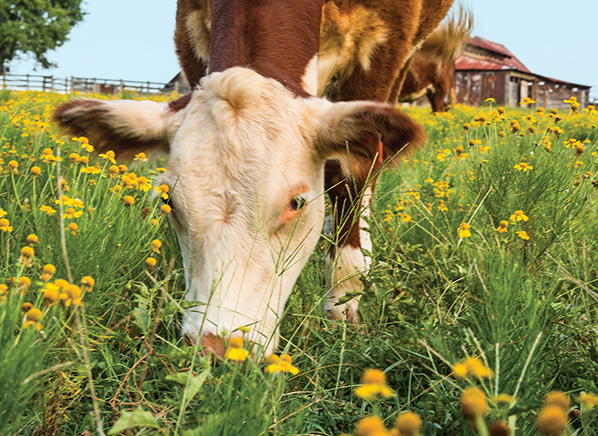
Ruminant animals (meaning animals with a rumin e.g.  beef and lamb)  are designed to eat one thing and one thing only and that is grass (pasture). The high water mark is actually feeding cattle deep rooted native perennial grasses as opposed to cereal grass as I outline in a past blog post here but for the purposes of this blog I’m keeping it simple and referring to grass as opposed to grains as the ideal food source for ruminant animals.  

Accordingly, we should first and foremost be asking for grass fed and finished meat. The “finished” part means finished on grass right up to the point of abattoir as opposed to finished on grains.  Many farmers might say “oh yes it’s grass fed” but they will finish the animals on grains hence why the “finished” part of the question is important. 

The reason why grains would be fed to cattle is to fatten them up before going to the abattoir. 

Grains make cattle not only fat but also sick as grains are not their natural diet. Sick animals mean sick humans who then eat the animals. A mismatch between biology and environmental factors causes illness and disease in all living things, not just humans. 

A piece of grass fed and finished meat often looks visibly different to grain fed meat. Grass fed meat will have the fat encapsulating the perimeter of the muscle meat where it is supposed to be, in contrast to a piece of grain fed meat where the fat is all marbled throughout the meat.The same effect happens to human muscle tissue when we overeat grains as they are not our natural diet especially in the large amounts that are consumed in modern society. There are some breeds of cows like wagyu which are exceptions to this rule where even grass fed wagyu will be marbled with fat.

2. ARE THE ANIMALS FREE OF ANTIBIOTICS AND HORMONES? 

What an animal consumes ends up in the animal’s tissues.  When cattle are administered antibiotics or hormones they can end up in our system when we in turn consume the animal as well as ending up in our waterways which we then incidentally consume. Antibiotic resistance and endocrine disrupting hormones are on the increase and have become significant health issues. 

A farmer who feeds his cattle exclusively pasture and understands the importance of an animal’s welfare and natural diet is unlikely to want to, or even need to, administer antibiotics or hormones to his cattle because his cattle are much healthier and thrive much better when they are roaming around in sunshine and eating pasture as that is precisely what their biology is suited to. So whether the animal is grass fed and finished is the more relevant question you need to ask (and when eating out it’s the only question I ask about red meat). 

In contrast, the industrial feedlot model produces sick cattle due to the abhorrent cramped and crowded conditions which breed illness and disease along with their unnatural grain based diet which also breeds illness and disease. In response, the sick cattle are then administered antibiotics which impacts their gut microbiome making them in the long term more susceptible to illness and disease so more or stronger antibiotics are administered and the cycle perpetuates. As a former hard core vegetarian / vegan, I would tout this animal welfare argument as my reason for abstaining from eating meat. But this conventional model is not what I, as a conscious omnivore, promote or support. There is a world of difference between the industrial feedlot model and a grass fed and finished model where farmers raise cattle humanely and organically with love and respect for both their animals and their environment. If you are struggling with the ethical issue of eating meat (as I once did) or know someone who is, I recommend reading the Vegetarian Myth by Lierre Keith or listening to Chef Pete Evans’ podcast interview of her  or listening to Melissa Ambrosini’s interview of Daniel Vitalis called To Meat or Not to Meat.  This blog is not intended to discuss or explore the ethical issues of eating meat but simply to elucidate the pertinent questions to ask if you do eat red meat. 

If in the case of illness or other specific circumstances grass fed cattle are administered antibiotics as a last resort, the farmer should quarantine the animal in question until the antibiotics are flushed through their system before their milk or meat is used for human consumption.

When ruminant animals are 100% grass fed, and their systems are free of antibiotics and hormones, then in contrast to the industrial feedlot model:

  1. Their meat has a higher micro nutrient profile i.e. higher in vitamins and minerals (and nutrients are precisely what our bodies run on, so the more nutrients the more we can fire on all 6 cylinders and function optionally!) 
  2. Their meat is more flavoursome (as nutrients are precisely what gives food its flavour) 
  3. It is a more ethical way of farming. I believe it’s unethical to feed an animal something it is not designed to eat. 
  4. It is a more environmentally sustainable way of farming. 

These 2 questions are redundant if the animal is wild (e.g. deer, boar, goat, rabbit) as they will naturally eat their native diet, though sourcing wild animals is much trickier business unless hunting is your thing 😉 (and if it is then share the fruits of your labour with me… pleeeease!).

The above two questions are the same questions to ask if buying the organs of ruminate animals e.g. beef, calf or lamb livers, heart, kidney, sweetbreads  etc

What about organic certification? 

Organic certification is comforting but not entirely necessary if the ruminant animal is 100% grass fed and free of hormones and antibiotics. In fact organic certification isn’t a guarantee that the animals are 100% grass fed (they could be fed organic grains which is still not their natural diet). So simply because meat is certified organic does not excuse you from  asking what the animals were fed. 

The importance of balancing our muscle meat intake with bone broth

Methionine rich foods like muscle meat should always be teamed with glycine rich foods like bone broth as methionine and glycine work synergistically. Failure to consume bone broth or some other glycine rich food if you consume methionine rich foods like eggs or muscle meat leads to an excess of methionine in the body which raises homocysteine levels in the blood which in turn raises inflammation in the body. We know that inflammation is the root cause of all modern disease. I’m not saying that we shouldn’t consume muscle meat but that if we do we should ideally be consuming it with broth or some other glycine rich foods. I explain this in more detail in  my online bone broth workshop. This wasn’t an issue for our hunter gatherer ancestors as they are nose to tail and in fact the bones, the fat and the organs of the animal were the most highly prized part of the animal with the muscle meat often discarded. 

122A2438.jpeg

How much muscle meat to eat? 

As a general rule,  no more than one palm size and palm thickness of protein (which includes muscle meat, bone broth, seafood, dairy) per meal per day. I discuss in more detail what your plate should look like in my health coaching sessions.

Some of my favourite butchers in Sydney (this list is not exhaustive):

Kingsmore Meats, 22 Plumer road, Rose Bay ph 93634971 and 61-73 Mentmore Ave Rosebury 

The Meat Store 262 Oxford St, Bondi Junction NSW ph 02 9386 9995 ($7 flat rate home delivery Sydney metro area via website) 

1888 Certified Shop K2, 1 Kiaora Lan, Double Bay ph 02 9328 3200 

Hudson Meats, 801 New South Head Rd Rose Bay ph 9371 1500, also at Cammeray, Lane Cove, Mosman, Drummoyne 

David Jones sells a selection of 100% grass fed  meat e.g. Cape Grim as do the large supermarket chains 

GRUB online delivery 

Feather & Bone online delivery or pick up from Rozelle or Marrickville 

Lettuce Deliver online delivery of frozen pastured meats 

Shoulder to Shank, 174-176 Military Road, Neutral Bay, ph 02 8969 6982 

Harris Farm Butchers, 259 Pittwater Road, Manly, ph 02 9977 6469 sell some grass fed meats  

Shiralee Meats, 25 Cross Street, Brookvale, ph 02 9939 0116 and coming soon to Manly 

Fairlight Quality Meats, 154 Sydney Road, Fairlight, ph 02 9949 2460 

Mona Vale Quality Butchers 18 Bunngan St, Mona Vale 02 9997 1581

Some of these butchers sell red meat that is exclusively grass fed and finished whereas others only sell only a selection that is 100% grass fed- so please ask!! 

Check out your local farmers market too! 


Did you find this blog helpful? I’d love to hear your thoughts and questions in the comments below. 

You might also like to read The Due Diligence Series: 4 Questions to Ask when Buying Olive Oil