Contact Star Anise Organic Wholefoods
 

Please use the form on the right to contact me!
I will get back to all enquiries as soon as possible.

Soulla x 


123 Street Avenue, City Town, 99999

(123) 555-6789

email@address.com


You can set your address, phone number, email and site description in the settings tab.
Link to read me page with more information.

Blog

This blog started as a way for me to share my recipes + culinary adventures, tips for vibrant health + happiness, thoughts on the latest developments in nutritional medicine + the low down on the Sydney wholefoods scene and beyond...

Salted Caramel Tart

Guest User


This is my original grain-free/gluten-free recipe made with truckloads of dairy (butter and cream) so apologies to my dairy-free friends. Those lucky enough to enjoy and tolerate butter and cream can revel in that perfect balance of cream, butter and maple syrup that makes for a divine caramel – one of the most tantalising taste sensations on the planet. Making this recipe to just lick the spatula is worth it alone. The gelatin powder holds the mixture together. Only a few ingredients go into making the filling but because they are so nutrient-dense (assuming quality ingredients are used) a teeny slice of this tart goes a very long way. It is extremely satiating! So pace yourself as you will live to regret it later! I prefer to make this with just the filling without the crust base (it’s so much quicker and easier, and for me the filling is where all the glamour is anyway). But I include the ingredients and directions for a gluten-free crust base if you want to consume as (or impress someone with) a complete tart - base and all. 

IMG_6781.JPG

Crust Base Ingredients:

180g flaked, shredded or desiccated coconut
180g dried figs (rehydrate for several hours or overnight in water to bring them back to wholefoods, then snip off hard ends)
OR 180g medjool dates (approx 8-9 dates. Weigh with seeds in, then remove)
4 egg whites (reserve the egg yolks for scrambled eggs, omelettes or mayo)
pinch of unrefined salt
1 tablespoon (20g) coconut oil or butter

Filling Ingredients:

½ tsp unrefined salt (e.g. Himalayan salt, sea salt, Murray River lake salt)
500g organic butter
400ml organic cream
¾ cup (240g) maple syrup (or other natural sweetener of choice)
1 tablespoon grass fed beef gelatin (I use GelPro gelatin powder sold at Broth Bar & Larder

Decorating Ingredients (optional):

A swirl of quality melted raw dark chocolate or a scattering of raw cacao nibs


Directions to make the crust base:

  1. Preheat oven to 120 degrees Celsius fan forced.

  2. Grease a round 25cm pie dish with olive oil, coconut oil or butter. 

  3. Process the ingredients together in a food processor until they reach a crumbly consistency.

  4. Press the shell mixture into the pie dish to evenly cover the base and the sides.

  5. Bake in oven at 120 degrees Celsius for 50 minutes if using dates, or 60 minutes if using figs, or until golden brown and slightly crispy.

  6. Store in fridge until ready to pour in the filling.

Hot Tip! When taking the shell out of the oven be careful not to touch the shell as it may crumble and break. Grab the pie dish not the shell!

Directions to make the filling:

  1. Gently heat all of the ingredients except gelatin powder in a saucepan until warm. Slowly add in the gelatin powder whisking constantly until all of the gelatin is fully dissolved. Do not allow to boil. 

  2. Pour into round tart dish either directly or into the crust base. Remove any surface bubbles with a spatula. 

  3. Refrigerate until set.

  4. Decorate as desired. 

  5. Keeps for a few days in fridge. 

Serves 12. 

CHOCOLATE SALTED CARAMEL VERSION

For a chocolate version, increase the gelatin powder to 2 tablespoons and add 80g of raw cacao powder into the saucepan

 

MY 2019 TOP 5 SCHOOL LUNCH BOX HACKS

Guest User

 
IMG_7140.JPG

The party is over. The summer holidays have whizzed by and a new school year is upon us. For this beach bum mum who loves her lazy sleep ins and long, loose, languid, unstructured days frolicking in the ocean with her kiddies, I can assure you that early morning rises, gun-to-the-head time pressures and ferrying kids around like a taxi driver, ain’t a welcome change. 

I can’t guarantee that the emotional and physical transition back to school  will be an easy one for you either, but I can assure you that with some basic fridge, freezer and pantry staples, and my top 5 school lunch box hacks,  you'll be quizzing around the kitchen like a wholefoods ninja, whipping up nutrient-dense lunchboxes that provide your little chimps with all the energy and building blocks they need to learn, play and concentrate all day without energy dips:

HACK 1: Get organised with containers

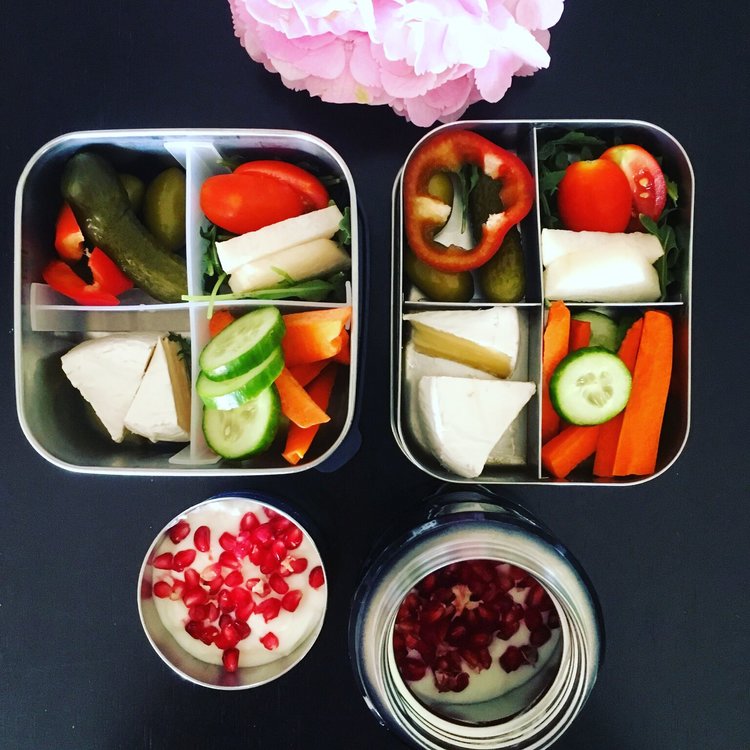
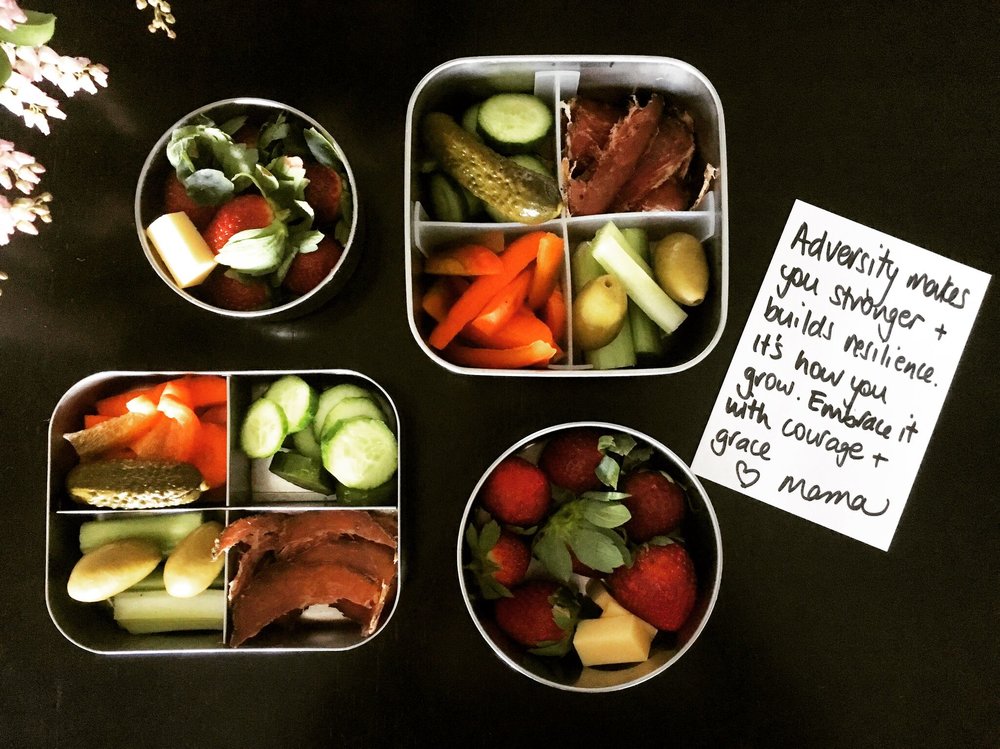
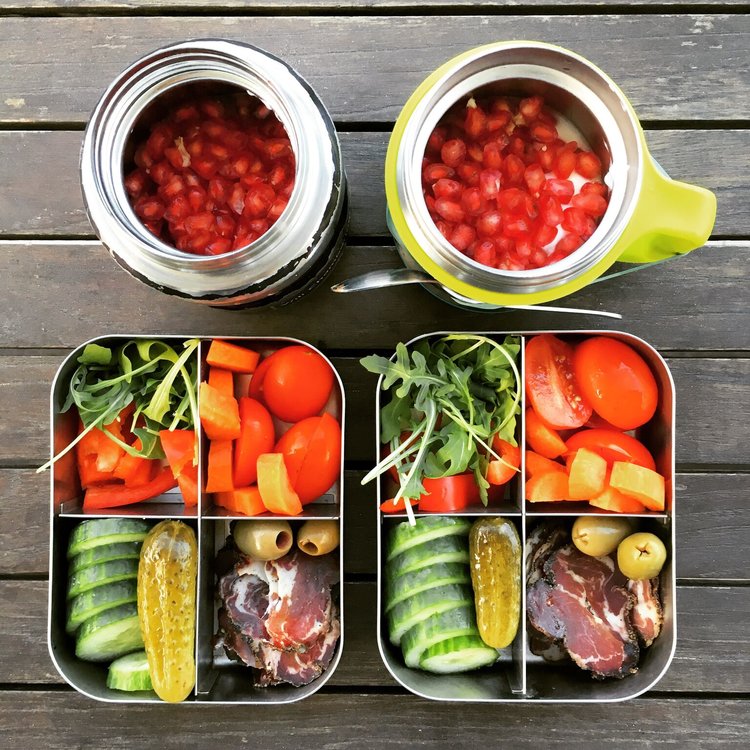
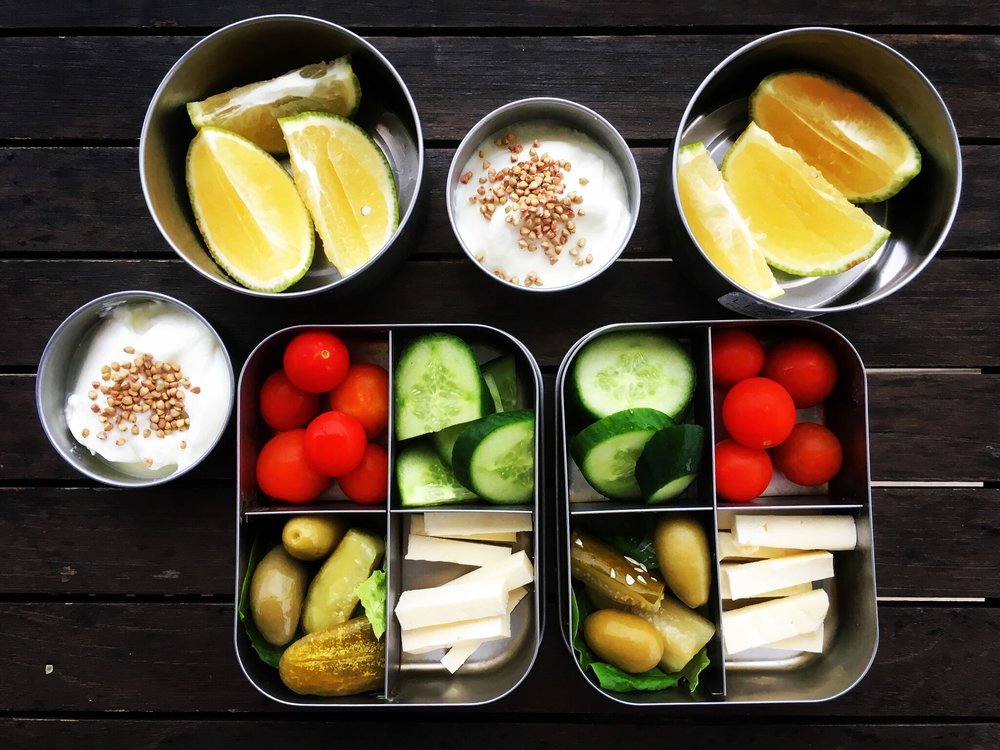
  1. Rectangular and square leak-proof stainless steel lunch boxes with removable dividers. Sold at Broth Bar & Larder. I love the quadrangle ones because I can ensure that ¾ of what goes into my kids’ lunch boxes is vegetables and ¼ is protein. I simply remove the divider when packing a salad. 

  2. Nesting trio of 3 round leak-proof stainless steel lunch box containers. Super handy for morning tea. Sold at Broth Bar & Larder

  3. Insulated food jars to keep food cold (e.g. yogurt) or hot (soups, broth, bolognaise, minced meat, stews). Sold at Broth Bar & LarderHot tip to keep food hot for longer: fill with boiling water to warm the container up, discard the water and add in the hot food. 

  4. Stainless steel (not plastic!) water bottles: buy online from Klean Kanteen or selected homeware stores like Kings of Knives and organic stores. Kings of Knives also sell the spouts separately if you loose one and I also recommend replacing all of the spouts periodically as bacteria can harbour in the spouts. Glass water bottles are another option but there’s the breakage factor (Miss M learnt that one the hard way!) and also the issue with extra weight to lug around. 


Hack 2: have a selection of quality protein on hand

  1. Activated nuts and seedsif permitted at schools, organic activated nuts are not only delicious but high in protein and ranked as the 3rd most-nutrient dense food on the planet according to the Mat Lalonde nutrient-density scale. The older grades are becoming more and more relaxed about nuts so these are making their way into my kids’ school lunch boxes in more recent years. Even if nuts are not permitted, seeds like pepitas and sunflower seeds are permitted  (the ex lawyer in me loves a loop hole!).  Our organic activated black pepitas come in nifty little 30g snack packs perfect for kids’ school lunches. Sold at Broth Bar & Larder or via our online store.

  2. Gruyere or Reggio raw milk cheeses: still made with 100% raw milk world-wide. Perfect to team with fruit for morning tea or can be the protein part of lunch. We sell these at Broth Bar & Larder by weight so you can buy as little or as much as you need.

  3. All other organic full fat cheese: I always keep a stash of other organic full fat cheeses in my fridge to have on hand. They will each contain different probiotics so ideally rotate between them. Eg gouda (high in vitamin K2), haloumi (pan fry), cheddar, brie, camembert etc. Purchase from organic stores. 

  4. Preservative-free cured meats from Bundarra Berkshires: we sell 2 varieties at at Broth Bar & Larder:  Little French Hamv and sliced hamdr.

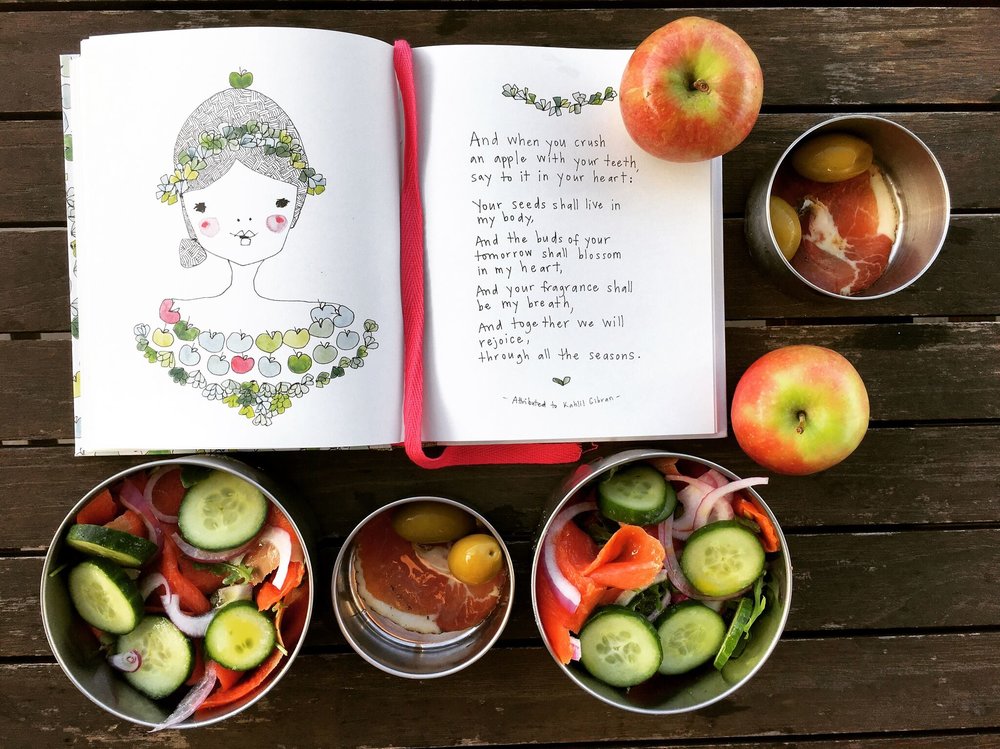
  5. The Canadian Way wild smoked salmon: delicious to throw into a salad to make wild smoked salad or to throw into lunch boxes as is dressed with lemon juice. Sold at Broth Bar & Larder. Beware that pretty much all (if not all) other smoked salmon in Australia is farmed. Read more here. Sold at Broth Bar & Larder. I keep a stash in my freezer to pull out from the night before. 

  6. Anchovies: buy from supermarkets or organic stores ensuring that they are marinated in olive oil and not vegetable oil or canola oil. Easy to throw into a salad.

  7. Other tinned fish: buy wild tinned fish from supermarkets or organic stores ensuring that they are either in brine or marinated in olive oil and not vegetable oil or canola oil.  BPA-free tinned wild fish sold online from Vital Choice. Easy to throw into a salad or can be eaten straight from the tin.

  8. Preservative-free beef jerky from Kooee made from 100% grass fed meat and spices. 3 varieties sold at Broth Bar & Larder.

  9. Cleavers paleo sausages and meat balls: I keep a stash of frozen ones in my freezer to pull out when needed and fry up the night before as part of dinner with extra for school lunches. 

  10. Full fat unsweetened yogurt made by Bondi Yogurt sold at Broth Bar & Larder. I also like the Meredith sheeps milk yogurt sold at organic /health food stores. For our dairy-free friends, an unsweetened probiotic-rich coconut yogurt made by Bondi Yogurt is also sold at Broth Bar & Larder.


Hack 3: Have a selection of fresh vegetables & fruit on hand

  1. Fresh vegetables: buy from your local farmers market or organic stores. At a minimum I try to have in my crisper drawer at all times some cucumbers, capsicum, cherry tomatoes, carrots, celery and some salad greens. Left over veggies (make more steamed/roasted veg from the night before), thinly sliced radishes, raw fennel and cooked and cooled potatoes are nice too for variety. Mix things up as the human body LOVES variety!

  2. Olives:  black olives in brine are sold at Broth Bar & Larder. If you buy marinated olives please read the label or ask if they are marinated in vegetable oils like canola oil – and if so avoid like the plague!

  3. Pickles: sugar-free pickles from Handsome Devils are sold at Broth Bar & Larder

  4. Raw fermented vegetables 3 varieties sold at Broth Bar & Larder. Easy to throw into a salad.

  5. Nori seaweed: let’s not forget sea vegetables and their richness in nutrients like iodine not found as abundantly in land vegetables. Remember that diversity is key and the human body wants a diversity of (real, whole) foods. My kids LOOOOVE nori. I buy from organic nori from organic/health stores and be sure that it contains only one ingredient – nori- because most brands now coat the nori in vegetable oils. 

  6. Fresh fruit: I always have a few pieces of seasonal fresh fruit on hand for morning teas that I team with yogurt, cheese, cream or some other quality protein/fat source (this teaming is important because fruit and veggies contain fat soluable vitamins and minerals meaning that they need to be teamed with quality fats or proteins for those vitamins and minerals to be assimilated /absorbed in the body. Secondly a quality fat/protein source will help slow down the release of blood sugars from the fruit to avoid insulin spikes and crashes).  I also have some fruit berries in my freezer (when I’ve no fresh fruit) to serve on top of yogurt. 


Hack 4: Have some crap-free nutrient-dense sweets on hand for the occasional treat

  1. Bliss Balls: sweetened only with dates and no concentrated sweeteners and loaded with healthy brain-boosting and energy-giving saturated fats, these come in 3 different flavours: raw cacao, choc orange (my kids’ fav!!), and activated nut. The first 2 flavours are completely nut free! Sold at Broth Bar & Larder or via our online store.

  2. Gummies: these come in 2 flavours and are made with 100% grass-fed gut-loving beef gelatin made by Gelatin Australia, organic raspberries or mangos and pure Canadian maple syrup. Sold at Broth Bar & Larder.

  3. Carob bears: available in the original 2 ingredient flavour or in mint flavour (infused with Young Living food-grade peppermint essential oil) , these are completely free of sweeteners and dates = guilt free! Yay! Sold at Broth Bar & Larder.


Hack 5: if you can prep it from the night before do it!

  1. Fill water bottles (don’t forget to add that pinch of salt) and pop straight into school bags.

  2. Chop veggies or add leftover dinner into lunch boxes.

  3. Fill insulated containers with yogurt etc etc


And one last tip…

To become a lunchbox pro, check out my SCHOOL LUNCHBOX INSPIRATION ebook where I will share with you robust nutritional theory, my secret tips and tricks, school lunch and morning tea “formulas” for success, teamed with pictures of nutrient-dense, grain-free, processed food free lunch boxes.


But wait…where’s the grains?

Despite grains being ubiquitous in society and especially prevalent in kids’ lunchboxes (from sandwiches, bagels, muffins, crackers, and much like sugar sneaks into just about everything in between) the truth of the matter is that no we don’t need grains to survive and in fact thrived for 2.6 million years on this planet as hunter gatherers without the advent of grains. Hence why the above 5 tips don’t include them as a daily staple in my kids’ lunchboxes. That’s not to say that my kids don’t ever eat grains as I do offer them the occasional piece of organic sourdough bread or soaked rice porridge or other grains properly prepared. However this is the exception to the rule and I prefer to fill them up with more nutrient-dense foods rather than empty fillers. Learn all about safe grains (especially gluten), why grains need to be  properly prepared,  who can consume them and in what circumstances, in my upcoming Food as Medicine talk or one on one health coaching session

And don't forget to check out my social media posts to see what my monkeys are taking with them to school each day. See social media platforms below.

inspiring parents to raise vibrantly healthy kids one nutrient-dense mouthful at a time!


...but do you know HOW to “JERF?”

Guest User

 
Image-90.png

I love this quote and it does summarise how we should be eating as a species BUT what causes confusion for many people is the finer (and no less important) detail of the SOURCE, the PROCESSING, the PROPER PREPARATION and the MACRONUTRIENT RATIOS of that real food. 

For example, raw honey is a real food but how much concentrated sweeteners should we be having a day? Spinach is a real food but do you know it shouldn’t be eaten raw? Meat is a real food but how many people consider that its nutritional value is entirely dependent on what the cows ate? Nuts are real food, but conventional nuts are one of the most heavily sprayed food items and moreover nuts need to be prepared in a certain way to make them digestible and absorbed. Fish oil and olive oil are real foods but their processing spans the spectrum to such a degree that they could be either rancid or powerfully medicinal. Ditto chocolate. Getting the balance (macronutrient ratios) of real food can also have a profound effect on your metabolism and health. If don’t get that balance right (e.g. eat too many real-food carbohydrates), optimal health and weight will be out of reach. 

If you’ve switched to a real foods diet but aren’t getting the results you want (looking and feeling your vibrant best!) it’s these finer details that can make a huge impact. 

So “just eating real food” is really only one part of dietary puzzle. I see so many people really struggling with the “HOW do I just eat real food?” This is where I come in and provide you with comprehensive yet concise fact sheets, information and education in my one on one health coaching sessions with exactly the same information being relayed (at a fraction of the price) in my FOOD AS MEDICINE TALKS

Next cities in the Australian Food As Medicine tour: 

Adelaide 16 Feb
Sydney 2 & 3 Mar
Byron Bay 13 Apr
Gold Coast 14 Apr


Make 2019 the year to really demystify any confusion you might have around what is real food and how to eat it to really optimise your health and well-being. After all, sourcing, preparing, and eating real food should be an enjoyable, easy and nourishing experience for our species on every level.